Wong Kar-wai’s In the Mood for Love opened at Cannes in 2000 and has barely left the cultural conversation since. More than two decades later, it placed fifth in the Sight and Sound decennial critics’ poll, the highest ranking for any film from the 2000s, which says a lot about how deeply it has lodged itself into the way people think about cinema and longing. Set in 1962 Hong Kong, the film follows two neighbors whose encounters are quiet, formal, and charged with something neither of them is ready to name. It is a love story that almost isn’t one, which is exactly why it lingers.
Part of what makes the film so difficult to shake is how much it leaves unspoken. Wong built it without a fixed screenplay, shaping scenes through repetition and instinct, and the result is a story where the emotional weight lives in hallways and glances rather than dialogue. Chow Mo-wan and Su Li-zhen share a building, a kind of loneliness, and a secret that neither of them asked for. What follows is less a plot than an accumulation of moments—shared meals, borrowed time, and the slow, painful realization that they have become closer to each other than they ever were to the people they married.
Two Strangers, One Building
In 1962 Hong Kong, Su Li-zhen (Maggie Cheung) comes to Mrs. Suen (Rebecca Pan) looking to rent a room in her apartment building. Not long after, Chow Mo-wan (Tony Leung) shows up asking the same thing, only to find out the room is already taken. Mrs. Suen suggests he check with her landlord next door, who might have something available. A few days later, Su and Chow end up moving in on the same day. They each get their things settled on their own, since both of their spouses are too busy with work to help. It’s a hectic, crowded day, and in the middle of all the chaos, Chow and Su briefly meet when some of their belongings get mixed up.
After that, the two of them fall into the rhythm of the building, joining Mrs. Suen’s family for dinner most evenings, with their respective spouses occasionally showing up when they happen to be home. Otherwise, they keep to themselves in their rooms. Su works as a secretary at a shipping company. Her boss is a man named Mr. Ho (Kelly Lai Chen), and a quiet, uncomfortable part of her job involves managing his personal affairs, including facilitating his own extramarital affair with a Miss Yu, something she can never discuss with anyone.
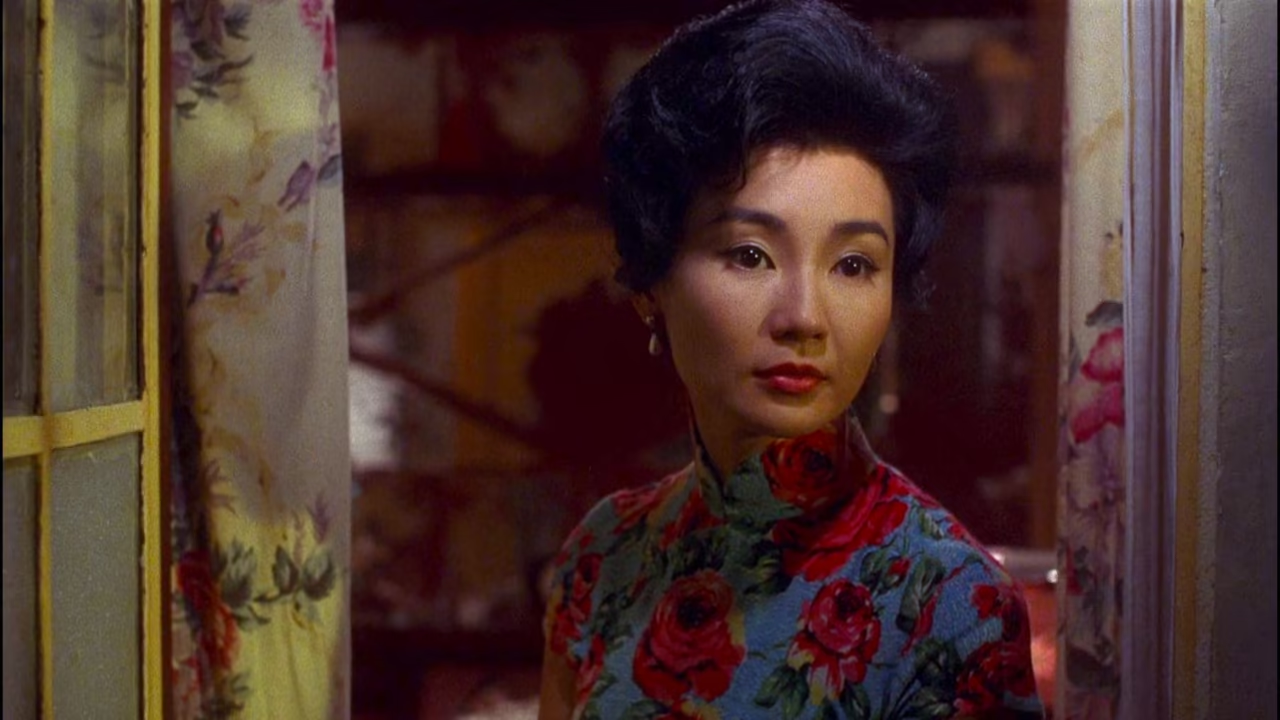
Chow is a journalist at a major news agency. Their lives are quite different. Su’s husband, Mr. Chan, works for a Japanese company, which means she enjoys a noticeably more comfortable lifestyle and financial situation. Her husband frequently showers her with expensive gifts, a way of making up, perhaps, for the long stretches he spends away in Japan. Then one day he comes back with a rice cooker from Japan, and Mrs. Suen takes an interest and orders one herself. She also nudges Chow to do the same, thinking it would be convenient for his wife, who’s always coming home late from overtime.
Chow takes her advice. It becomes clear that through these small neighborly favors and the constant proximity of their shared hallway, Chow’s wife and Su’s husband have already found ways to grow close. Meanwhile, Chow has quietly been drawn to Su, though he’s been pushing those feelings down out of loyalty to his wife. Still, when a friend of his needs to book tickets to Singapore through Su’s company, Chow uses it as an excuse to reach out, and the two of them gradually get closer.
Their connection deepens through a shared love of storytelling, as both of them are fans of martial arts serials and enjoy talking about them together. Both of them are also Shanghainese expatriates, part of the same wave of immigrants who came to Hong Kong after the revolution, and it’s another thread of common ground they don’t need to explain to each other.
As time goes on, the cracks in Chow’s marriage start to show. He tries to smooth things over with his wife, but she keeps pulling away. Things come to a head when his close friend Ah Ping (Siu Ping) mentions he spotted Chow’s wife walking with another man. Chow doesn’t want to jump to conclusions, so he brushes the comment off, even though it lingers in the back of his mind. Su’s home life is heading in the same direction; she’s grown suspicious after once hearing her husband’s voice coming from the Chows’ room while Mr. Chow was away at work.
Identical Gifts, Undeniable Truth
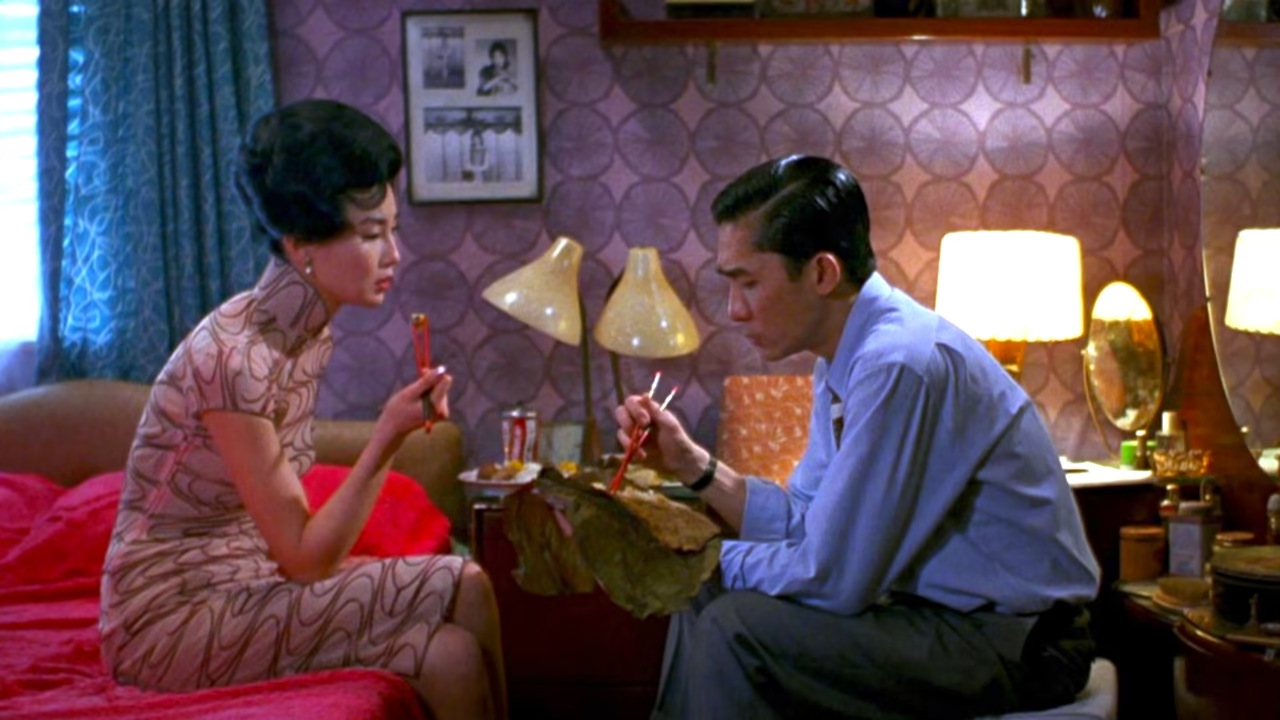
She has noticed a troubling pattern. Chow’s wife and her husband always seem to disappear at the same time, gone for days with their separate excuses. The truth doesn’t come out all at once, though. Chow and Su only fully put the pieces together during a tense conversation at a café. Su points out that Chow’s tie is identical to one she bought for her husband. Chow reveals it was a gift from his wife. In turn, Chow recognizes Su’s handbag as the exact same model he bought for his own wife. These coincidences are too specific to ignore, leaving them both deeply uneasy as the reality of the betrayal sets in.
The realization settles between them like a physical weight. Their spouses are having an affair with each other. It is a painful truth to sit with, yet life carries on. Strangely, the betrayal draws Su and Chow closer together. They begin spending more time together, almost as if they have stepped into their spouses’ shoes. Their conversations remain fixed on the people who wronged them. They dissect the details of what their spouses like and what habits they share. They try to understand the affair from the inside. While Chow starts to feel something stirring for Su, she cannot easily let herself go there. She is paralyzed by the idea of answering her husband’s infidelity with one of her own.
One night, with Su’s husband again claiming a work trip to Japan and Chow’s wife claiming she’s gone to care for her sick mother, a letter arrives for Chow with a Japanese postmark. It’s from his wife, but the Japanese stamp says everything. The contents make Chow furious. The affair has gone further than he imagined. At this point, it feels like neither of them has any real chance of stopping what’s already been set in motion, not their spouses’ affair, and not whatever is quietly growing between the two of them.
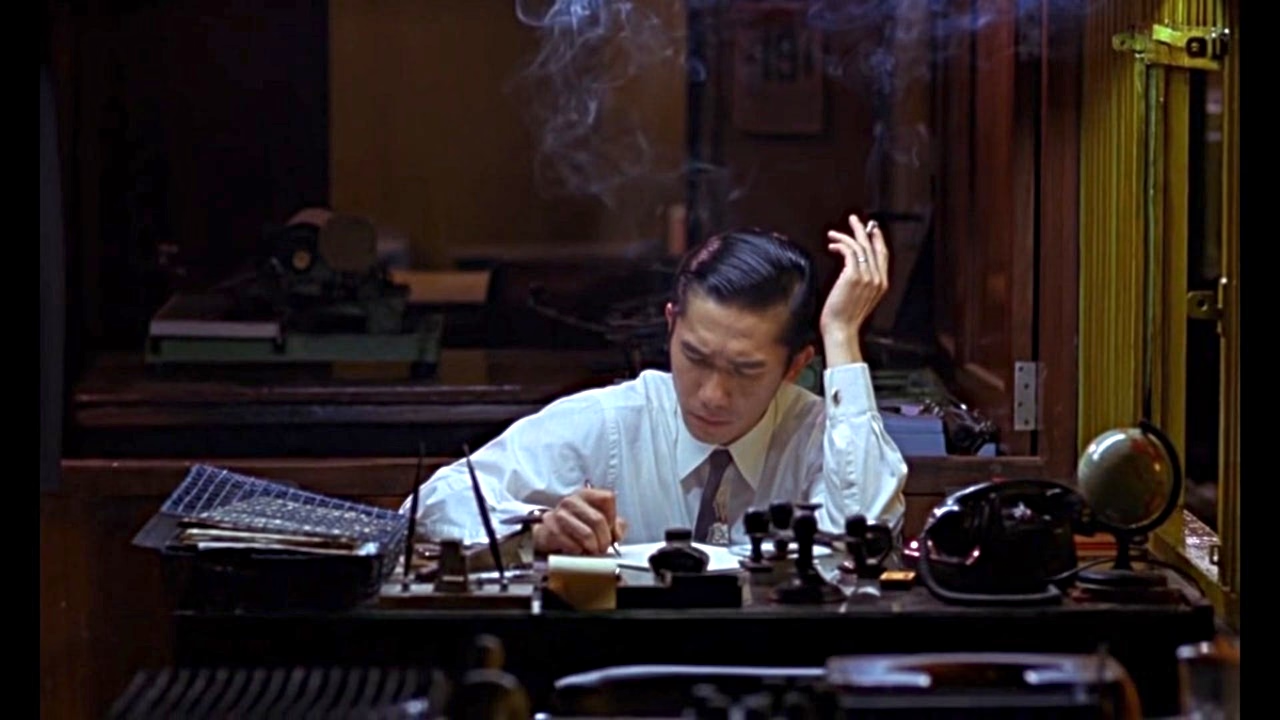
The days keep passing. Chow comes down with a severe fever with no one to look after him. Su, moved by sympathy or perhaps something deeper, steps in to care for him. She makes him rice porridge and stays by his side while he recovers. Whether it is born of pity or a growing genuine affection, the two of them find themselves drawing even closer. This quiet intimacy in the sickroom highlights how much they have come to rely on each other in the absence of their spouses.
Explore More:


Writing As an Escape
Once he recovers, Chow asks Su to help him write a martial arts serial. It is a dream he has long held but never had the nerve to start on his own. They stop worrying about whether their spouses might ever return to fix their marriages. As Chow puts it, the betrayal was not their fault, and they owe it to themselves to move forward without guilt. He has stopped thinking about his wife, and Su has stopped caring about her husband’s whereabouts. They pour their energy into their shared work, swapping ideas and building a world of their own.
With all this shared time, their hours together stretch longer and longer. One night, Su ends up stranded in Chow’s room after their landlords come home unexpectedly and play mahjong until dawn. She can’t slip out without being seen, so she stays the night. She’s adamant that no one can find out how close they’ve become. They have to keep up appearances in front of the landlords for the sake of their reputations.
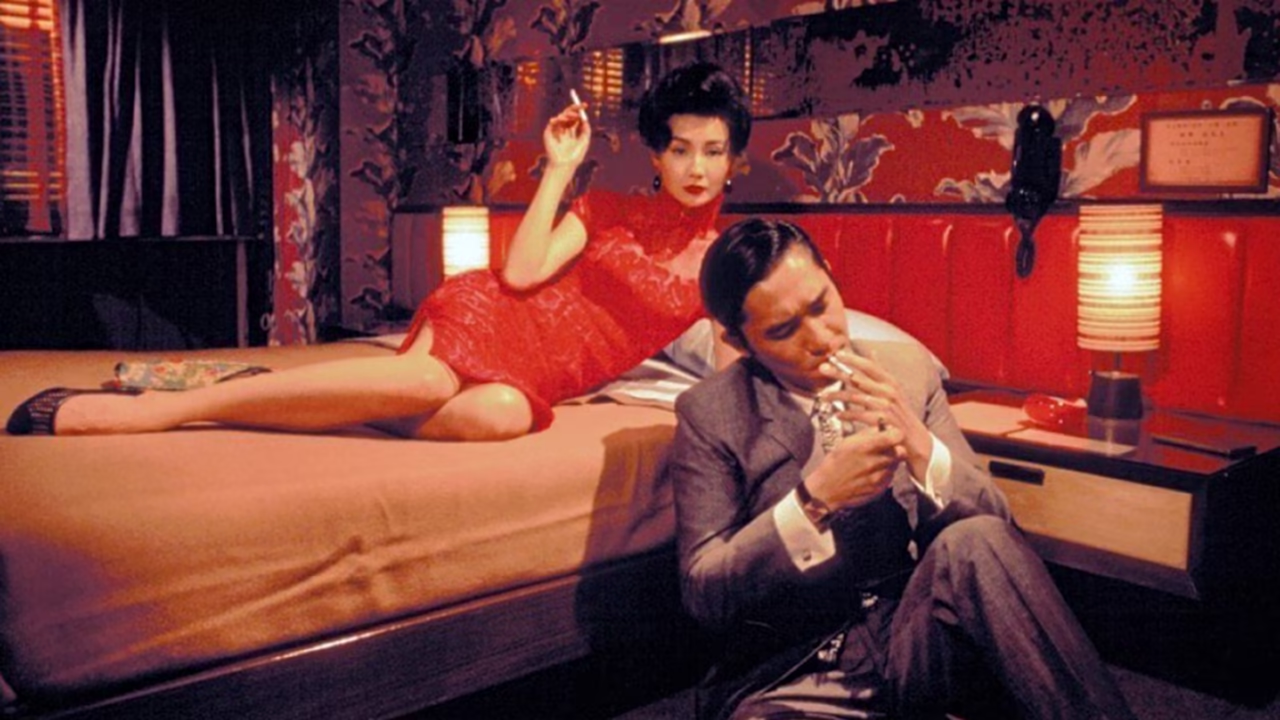
By now, the two of them are inseparable. Their writing keeps generating demand, and readers want more, so there’s always another installment to work on. Knowing that he and Su are going to be spending even more time together, Chow quietly rents a hotel room where they can work without prying eyes or the risk of gossip. Su hesitates at first and doesn’t show up on the day they’d agreed on. But when she finds herself having trouble reaching Chow because their schedules keep missing, she eventually accepts his offer and goes to the hotel to write with him.
They spend hours pouring ideas onto the page, days building something together. At some point, they even rehearse what they’d say if their spouses came back to Hong Kong, playing out the scene, running through the questions, the confrontations, the choices. They go through it again and again, and it’s brutal. Su cries, still raw from what her husband did. She’s in Chow’s arms while he tries to reassure her, telling her none of this is her fault and she doesn’t need to carry it.
Meanwhile, their spouses still haven’t come back, weeks later. Mrs. Suen asks Su about it and also mentions that she’s hardly seen Su around lately. Su gives vague answers and changes the subject. But the conversation rattles her. The next time Chow asks her to stay the night at the hotel to finish their work, she says no. She doesn’t want to give Mrs. Suen anything to talk about. She goes back to her room and sits with Mrs. Suen for a mahjong game instead.
Her body is there in the apartment, but her mind is somewhere else entirely. She’s thinking about her husband, probably off with Chow’s wife without a care in the world. And she’s thinking about Chow, probably at the hotel struggling through the writing alone. The same thing happens to Chow at the newsroom, where he sits thinking about Su, knowing she isn’t coming that night. They can’t seem to stay apart. Chow especially keeps finding ways to engineer more time together through the writing project.
They Admit What They’ve Become
Even so, both of them had been so sure, at the beginning, that they’d never become like their spouses. That they were different. But the longer this goes on, the harder it is to deny. Feelings have grown. Chow admits it first, saying he can’t stop what he feels for Su, and it kills him knowing she probably won’t leave her husband. When Ah Ping offers him a job in Singapore, Chow considers taking it and not coming back. But that night, Su tells herself she’ll wait for her husband to return and let go of Chow. They agree to stop seeing each other. It’s better this way.
Then, at the very last moment, Chow asks her to come with him to Singapore. Su is thrown into a state of deep conflict. She turns the offer over and over in her mind, weighing the safety of her marriage against the possibility of a new life with him. She spends hours wandering the streets and sitting in their shared spaces, paralyzed by the choice. By the time she finally gathers her courage and decides to go, the clock has run out. She rushes to the hotel to find him, but the room is empty. Chow has already left for the airport. The silence that follows is absolute, there are no calls, no letters, and no attempts to bridge the distance they have put between themselves.
The following year, 1963, Su travels to Singapore and goes to Chow’s apartment. He has been working there for a Singaporean newspaper. She calls from downstairs, but he has already left for work. She goes up to his room intending to wait. She looks around the space where he now lives. She calls his office. When Chow picks up the phone, she cannot bring herself to say anything. She just listens to the sound of his voice and then hangs up. Whatever she came there to tell him remains unspoken. She hangs up and leaves his life without a word. She doesn’t trust herself to see him again. She leaves. On her way out she takes back her slipper, the one Chow had kept as a reminder of her. She carries it away with her and leaves nothing behind.
When Chow comes home later, he panics. He realizes a sandal is missing and thinks someone broke into his room. Then he finds a cigarette butt in the ashtray with lipstick on the filter. He knows immediately that it was Su. But he is too late. He does not know how to reach her in Singapore. He has no phone number and no idea where to look. The realization that she was so close and is now gone again leaves him in a state of quiet desperation. He is forced to accept that the moment has passed and she has vanished back into her own life.
He goes to find Ah Ping for a meal to try and shake off the sadness. During their dinner, he tells Ah Ping an old story. In the past, if someone had a secret they could not tell, they would climb a mountain and find a hollow in a tree. They would whisper the secret into the hole and then pack it with mud to leave it there forever. Ah Ping does not really listen to the meaning of the story. He does not notice that his friend is heartbroken or that he is carrying a secret chapter of his life. Chow still loves her, but he is certain now that she was never going to choose him.
Back to Where It Started
Three years later, Su visits Mrs. Suen, who is getting ready to emigrate to the United States. Mrs. Suen mentions that Hong Kong does not feel like it used to. The Koos are gone and the building is quieter. Her daughter worries about the situation in the city because of the early rumblings of the Cultural Revolution. Su asks about the apartment and finds out it is available. She takes it. She moves back into the space where her history with Chow began. She is not alone. She has a young son with her. Whether the boy belongs to her husband or to Chow is a secret she keeps to herself.
Not long after, Chow comes back to the old apartment building to visit his former landlord. He learns that the man has moved away to the Philippines. The hallways feel different now and the life he once knew there has faded. He asks about the Suen family next door and the new owner tells him a woman and her son are living there. Chow just smiles and does not ask for any more details. He walks away and never learns that the woman behind that door is Su. He decides that some things from the past are not meant to be reclaimed and some people are better left as memories.
In 1966, Chow travels to Cambodia as a journalist to cover the official visit of French President Charles de Gaulle. It is a time of great political change as de Gaulle calls for world powers to pull back from the war in Vietnam. While in the country, Chow visits the ruins of Angkor Wat. He finds a small crevice in the ancient stone wall and leans in close to whisper his secret. He then presses mud into the hollow to seal it shut. He leaves everything he has kept inside buried there in the stones of the temple. It is just like the story he once told Ah Ping and his secret is now safe forever.