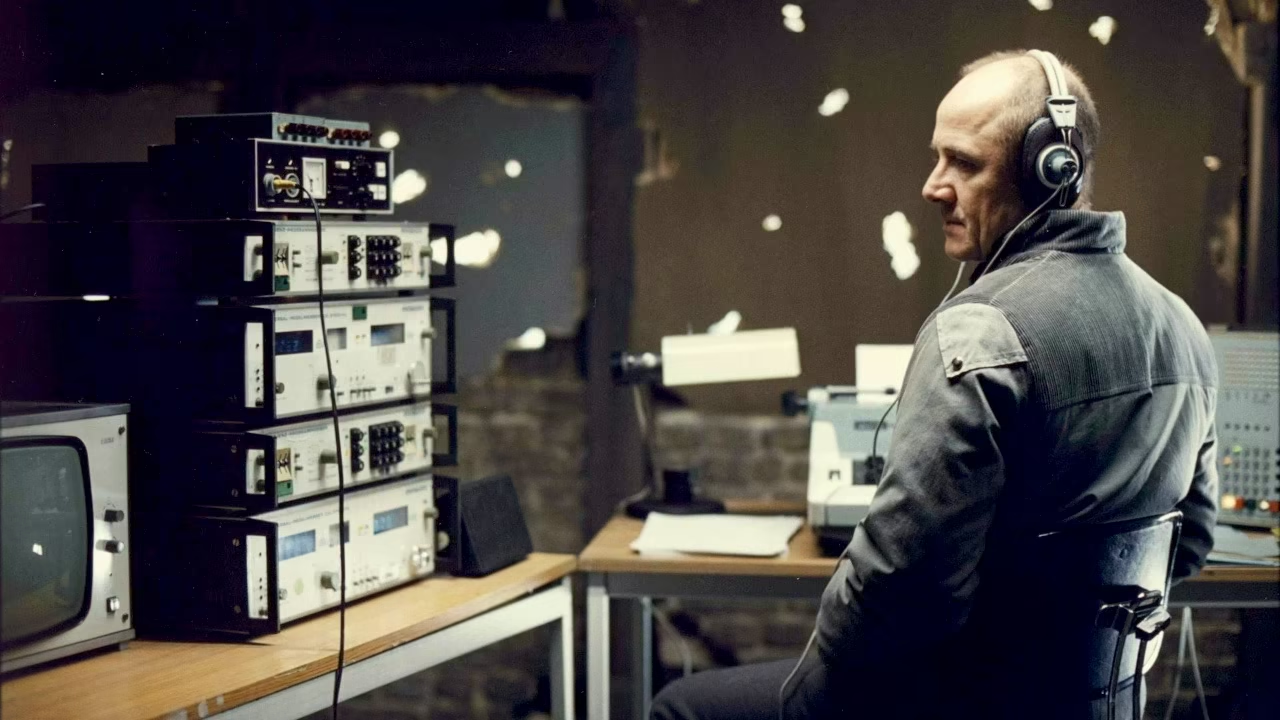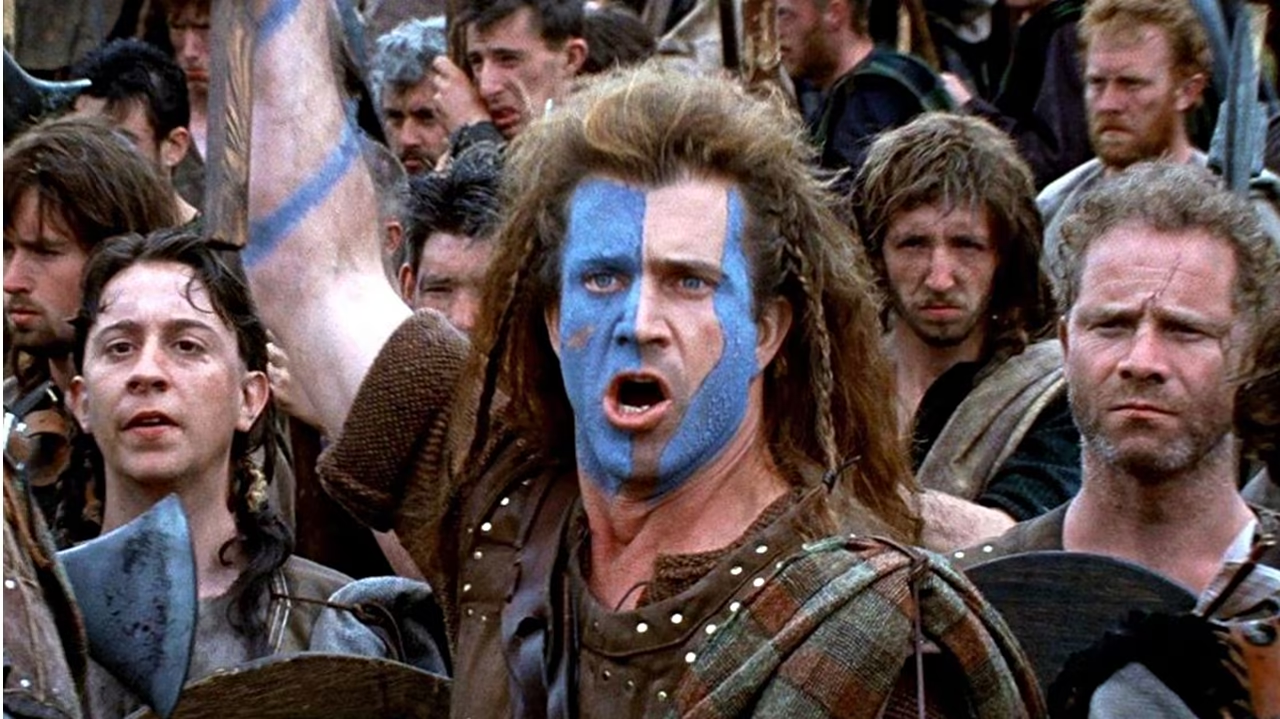
Braveheart came out in 1995, won five Academy Awards including Best Picture, and then did something that almost no Hollywood film has ever done: it measurably changed the tourism economy of an entire country. Within two years of release, researchers found that more than half of visitors to Stirling, Scotland had seen the film, and a tourism report put the so-called Braveheart effect at somewhere between seven and fifteen million pounds in new visitor spending. A movie about a 13th-century peasant rebellion was moving real money through the Scottish economy. That is a strange kind of power.
The film is loosely based on Blind Harry’s 15th-century epic poem about William Wallace, which means it is already one fiction away from the actual history. Mel Gibson made it two fictions away, adding kilts that were four centuries out of date, a romance that probably never happened, and a villain so pantomimically cruel he almost tips into comedy. None of that stopped it from working. Gibson plays Wallace as a man who wanted nothing to do with any of this, and that is what makes the whole thing land. Here is how the story goes.
Scotland Falls to Longshanks
The film opens in 13th-century Scotland, 1280, in the shadow of a power vacuum. King Alexander III of Scotland has died without a male heir, and the Scottish nobles, unable to unite around a single claimant, are left exposed. Edward I of England, known as Longshanks (Patrick McGoohan), sees his opening and moves swiftly, invading and conquering Scotland before any real resistance can take shape. What the Scottish nobles couldn’t do together, Longshanks does alone. Scotland falls, and with it, any illusion that the nobles can protect their own people.
We meet the Wallace family in the earliest days of that occupation. Malcolm Wallace (Sean Lawlor) and his two sons, John (Sandy Nelson) and young William (James Robinson), head out to visit a neighbor, though Malcolm tells William to stay behind. The boy follows anyway. What they find inside are bodies hanging from the rafters. Malcolm and John ride off to confront the soldiers responsible, and neither comes back. At the funeral, a young girl named Murron (Mhairi Calvey) quietly slips William a sprig of purple flowers. Then a man named Argyle (Brian Cox) shows up, William’s uncle, who takes the boy in and eventually sends him home as a grown man.
Years later, we’re shown the wedding of Longshanks’ eldest son, Prince Edward (Peter Hanly), to a French princess named Isabelle (Sophie Marceau). The ceremony is noticeably awkward, because Prince Edward keeps glancing back at a young man standing behind his father. It turns out the prince is gay and is in a relationship with his own adviser, Philip (Stephen Billington). Isabelle has never been touched by her husband, and his complete disinterest in warfare constantly disappoints and embarrasses his father.
After the wedding, Longshanks calls his son to a council meeting, but it’s Isabelle who shows up instead. He wants to hand out land rights to the nobility, his leverage for controlling Scotland, but new land means new taxes flowing into France. Ever the schemer, Longshanks dusts off an old tradition where a commoner woman gets married and the nobleman has the right to sleep with her on their wedding night. This is the law known as Prima Nocta. Meanwhile in Edinburgh, we meet Robert the Bruce (Angus McFadyen), the primary claimant to the Scottish throne. Word reaches him about the decree, and he understands it for what it really is: a tool to buy the loyalty of his supporters.
William Returns, Murron Dies
Back with William (Mel Gibson), he visits the ruins of his old home before meeting up with his friends. He reunites with his best friend Hamish Campbell (Brendan Gleeson), and runs into Murron (Catherine McCormack), the girl who gave him a sprig of purple flowers when they were children. Old feelings come rushing back. But the celebration is cut short when English soldiers show up demanding their Prima Nocta rights, looking to take a newly married woman from the crowd.
That afternoon, William asks Murron’s father (Sean McGinley) for permission to take her out. Her father refuses because he’d only approve if William became a warrior to fight the English. Rather than wait, William arranges a secret wedding with Murron. During the ceremony, Murron gives him a handkerchief embroidered with purple flowers, a callback to how they first met as children. The very next day, soldiers ride into the village. They spot Murron and try to assault her, but William arrives just in time and stops them. He tells Murron to take his horse and ride to their usual meeting spot. But the soldiers intercept her horse and capture her, all without William knowing.
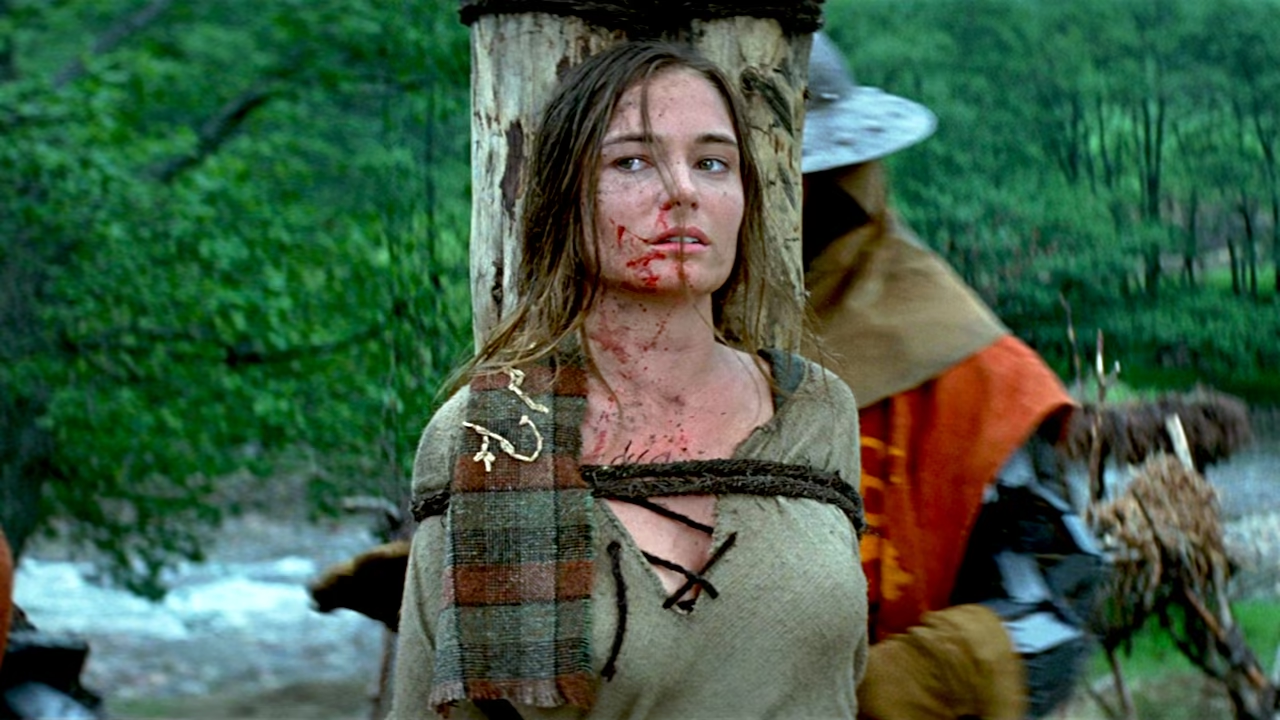
Thinking she’d made it safely, William goes to find her, but she’s not there. He rides back and finds Murron dead, bound and with her throat cut. Something breaks open inside him. He tears through the English soldiers in a rage, fighting alone at first, until Hamish and the other villagers join in. They kill the garrison commander the same way Murron was killed. William and the villagers give Murron a proper burial. He kneels before her father and apologizes. The old man holds back because what William did to those soldiers is proof that someone finally has the guts to fight back.
That night, a group from a neighboring village led by MacGregor (Tam White) shows up, wanting to join the fight. The next morning, William and fighters from several villages attack an English garrison post. The Scots disguise themselves in captured English uniforms to get close. They take the post, William makes the soldiers deliver a message that Scotland’s sons and daughters are no longer property of the English crown—and they burn the place to the ground.
England Hunts William Down
When Longshanks hears about it, he confronts his son and demands a solution. The prince shrugs it off. Longshanks dismisses everyone from the room and backhands his son across the face. He orders the prince to crush the rebellion by morning. While Longshanks heads off to France, Isabelle tries to comfort the prince, but he shoves her hand away. One of Isabelle’s ladies-in-waiting murmurs that she hopes Isabelle will be a widow soon. English troops immediately begin tearing through every village, burning homes and doing whatever it takes to find William. At one point they corner some villagers at the base of a cliff and demand to know where William is. That’s when William and his men appear on the clifftops above. The English suffer yet another humiliating defeat.
Back in Edinburgh, Robert updates his father (Ian Bannen) on William’s rebellion. His father is kept hidden because Robert doesn’t want the other nobles to know he’s sick with leprosy. Robert admits he wants to fight alongside William. But Robert’s father is cunning and gutless, so he talks Robert out of it and pushes him to ally with England so Robert can take Scotland’s throne for himself.
Isabelle and her lady-in-waiting are privately talking about William. The servant got her information from a judge she’d slept with, who said that William is fighting because the English killed the woman he loved and his whole rebellion is driven by grief and vengeance for a lost love. Hearing this, Isabelle finds herself wishing she could find a love like that.
Elsewhere, William comes up with the idea of crafting spears twice the height of a man to deal with English cavalry. Around this time, a new recruit shows up, a slightly eccentric, deeply religious Irishman named Stephen (David O’Hara). Stephen saves William’s life when an English spy tries to kill him during a hunting trip, earning William’s complete trust. Word also comes that hundreds of Highland volunteers are signing up to join him.
Explore More:
The Battle of Stirling
The battle at Stirling begins. As the Scottish fighters arrive and see the English army, thousands strong, doubt starts spreading. Several noble fighters begin pulling back, saying the whole thing is suicide. That’s when William rides up and gives them a speech. There’s no such thing as freedom without a fight. If they turn around and go home now, they’ll just die there anyway. At least on this field, they’re dying for something, for freedom. The men roar back to life, shouting “Alba gu brath,” Scotland forever. Before the fighting starts, both sides try to negotiate. The English commander delivers Longshanks’ terms, telling William to stand down and every man gets a plot of land.
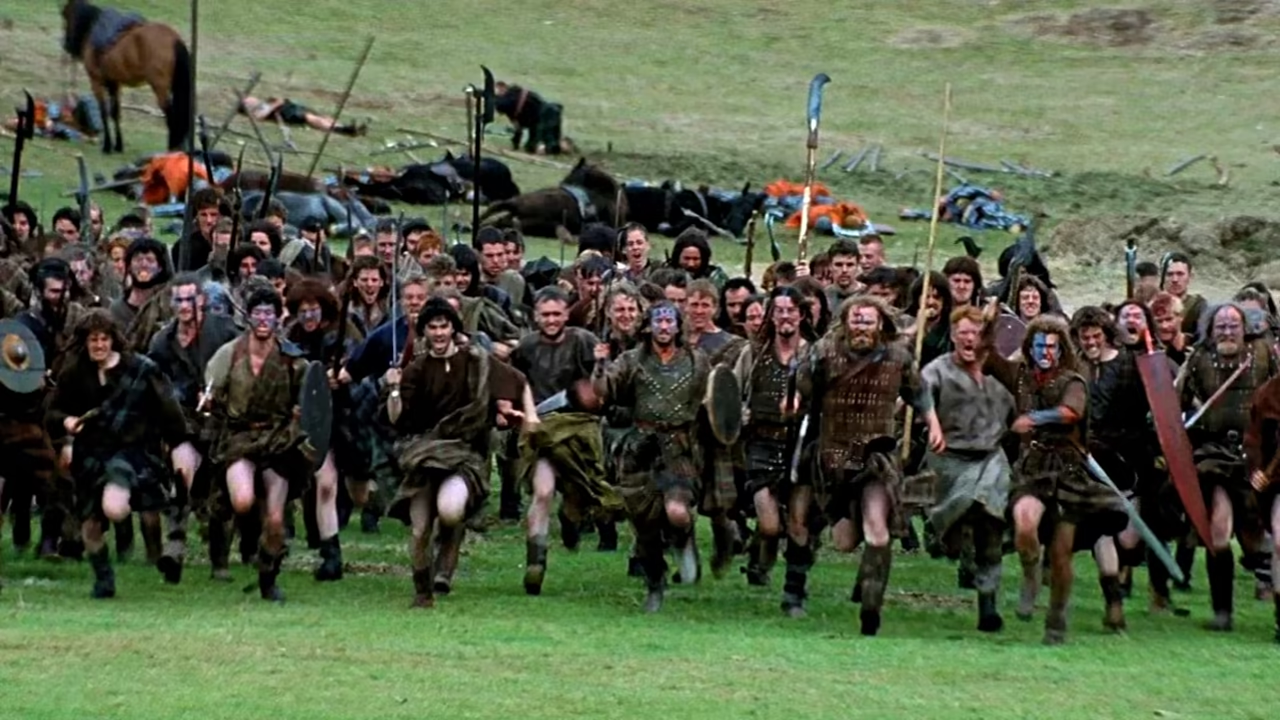
William fires back: the English can withdraw and personally apologize at every home they’ve destroyed over the past few hundred years. Negotiations go nowhere, and the battle begins. William’s men drop their pants and moon the English cavalry, goading them into charging first. Then he orders his flanks to fall back and swing around. The English commander, thinking the Scots are running scared, sends his horsemen in. At exactly the right moment, William’s men raise the massive spears they’d prepared as the cavalry charges straight into them. The horses and riders are impaled. The English archers are then ambushed from behind by Scottish horsemen, sealing the victory.
After the battle, William is knighted. But instead of celebrating, the clans immediately start squabbling over land and loyalty. William tells them bluntly that the English are coming back and the war isn’t over. He wants to take the fight to England itself. The nobles laugh at the idea. He cuts straight to the point with Robert, telling him that the nobles and common people alike will follow Bruce if Bruce is actually willing to lead them to freedom. William marches his army to the English stronghold at York. Prince Edward, running things while his father is in France, never sent reinforcements. William’s men build a battering ram and break down the gates under heavy arrow fire. They storm the fortress, defeat the garrison, and kill Longshanks’ nephew.
Days later, Longshanks storms back from France and tears into his son. His fury peaks when he receives a package containing his nephew’s severed head. Philip steps forward to offer military advice. Longshanks throws him out the window without a word, and Philip crashes to the ground dead. He then sends Princess Isabelle to negotiate with William and bribe him, knowing William would never kill a woman. Isabelle delivers the offer: stand down and receive a noble title and gold. William refuses. Longshanks massacred his people and murdered his wife, so there’s nothing that man could offer him. He sends word that as long as he and the Scots are breathing, they will not be ruled by a king who occupies their homeland. Hearing that, Isabelle starts to see that William is the real deal.
Back at court, Isabelle learns that Longshanks has already been plotting, having arranged for French mercenaries, Irish soldiers, and an English archer brigade to encircle and destroy William. The moment she finds out, she secretly sends her lady-in-waiting to warn him. She’s crossed over to his side. William sends Stephen to confirm the enemy’s approach. Stephen spots them coming by river on large ships.
The Trap at Falkirk
William and Hamish ride to Edinburgh to rally the noble council. The Edinburgh nobles are spineless and just want to play it safe with diplomacy. William calls them cowards to their faces. Robert pulls William aside, pessimistic about the numbers, but William pushes back and says if all the Scottish clans united, they could beat this. They shake hands and Robert seems genuinely convinced. Then Robert’s father gets to him again and talks him into siding with Longshanks.
William quietly prepares the battlefield by pouring oil and fuel across the field and covering it with dry grass. The next morning, Longshanks himself commands the English and their allies. Hamish is worried because Robert the Bruce’s men haven’t shown up. The battle begins. The Irish soldiers at the front of the English line defect and join the Scots. The archers William had placed also quietly switch sides. When the English cavalry rides into the kill zone, William drops his signal flag and the archers loose flaming arrows into the fuel-soaked field.
But then the clans of Morne and Lochlan withdraw, abandoning William on the field. Longshanks bought them off. William watches the Scottish nobles betray him in real time. With the flanks gone, his men are exposed and the English archers rain arrows down on them. The Scots start falling. Longshanks begins leaving the field. William charges after him on horseback—but he’s cut off and knocked down by a royal guard. He fights back and overpowers the man, only to look up and realize it’s Robert the Bruce. The man who shook his hand had just tried to stop him on behalf of Longshanks. William is too stunned to raise his sword and passes out.
Robert, drowning in shame, scoops William onto Stephen’s horse and gets him out. William survives. Robert picks up the embroidered handkerchief that fell from William’s pocket and keeps it. That was the Battle of Falkirk, 1298. Afterward, only a handful of William’s men made it out alive. William hunted down the Scottish nobles who betrayed him, reportedly as many as fifty traitors in a single day. Robert and a bald noble named Craig (John Kavanaugh) were terrified and started looking to make amends.
Longshanks hatched a plan to lure William into a trap by disguising soldiers as Princess Isabelle’s entourage. But Isabelle had already warned William. When the fake delegation arrived, William had them locked up and burned alive. Shortly after, William went to personally thank Isabelle. In her, he saw a flicker of Murron, her spirit and her fire. Isabelle, who had quietly fallen for him, gave herself to him. Isabelle, who had never once been touched by her own husband, finally understood what it felt like to be truly loved.
Lord Craig arrived with a message from Robert the Bruce, who wanted to meet, wanted to apologize and make peace. He brought William’s embroidered handkerchief as proof. Hamish begged William not to go. But William rode to Edinburgh alone. Robert welcomed him warmly. But Craig had already sold them out. English soldiers were positioned and waiting. William was captured and handed over to the crown. Robert’s own father had orchestrated the whole thing because he wanted Robert to rule Scotland unchallenged. Robert grabbed his father by the throat in fury, but it was too late.
William’s Final Stand
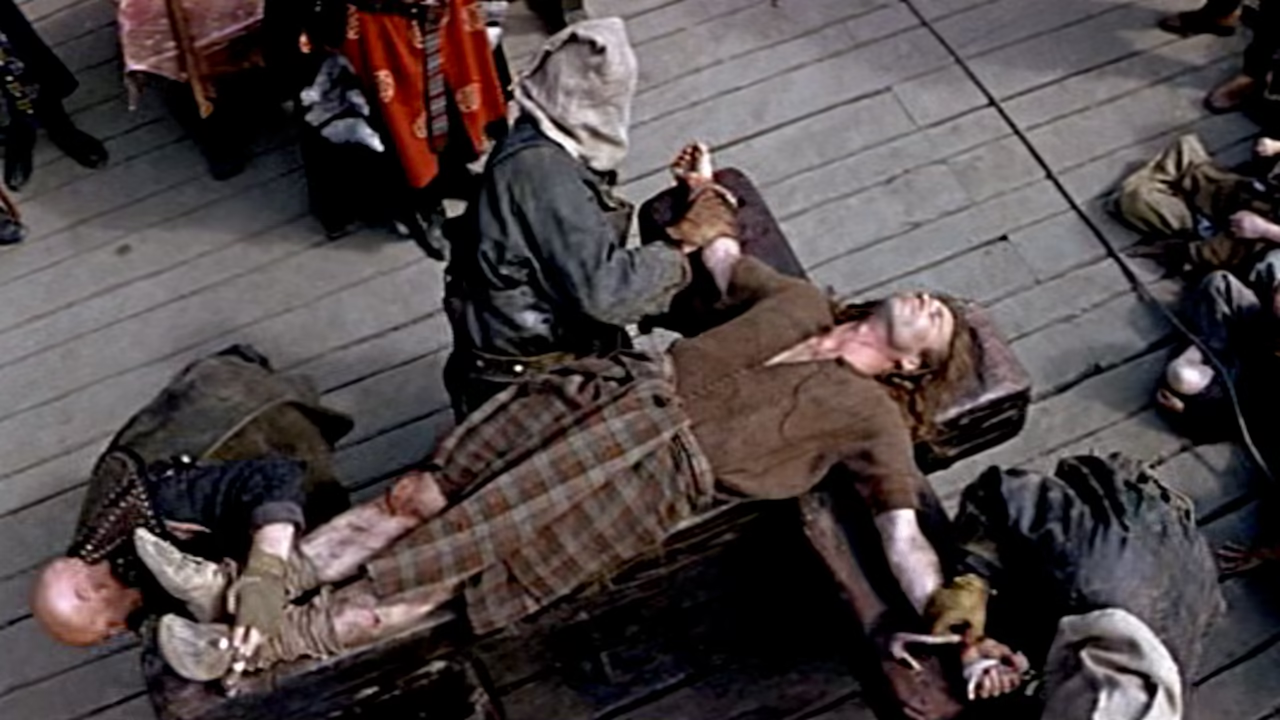
William Wallace was put on trial and given two choices: apologize and his execution would be quick, or refuse and be tortured first. For William, there was no real choice and he’d rather die screaming than bow to England. Princess Isabelle came to visit him in prison and pleaded with him to just say the words and save his life, but he refused. She broke down in tears and slipped him a painkiller before she left. The moment she was gone, William spat it out. He wasn’t going to face his death in a fog.
The next morning, Isabelle went to beg Longshanks for William’s pardon, only to find the king lying paralyzed and unable to speak. She leaned in and whispered coldly that he was going to die soon, and his son wouldn’t last long after him. Then she told him the thing that would have destroyed him. The child she was carrying wasn’t Prince Edward’s. It was William’s—Scottish blood, possibly the future heir to the English throne. Longshanks could do nothing but lie there.
Execution day. A crowd packed the square. The English people jeered at William, throwing filth and rotten food at him. Hamish and Stephen were there, helpless. William was tortured relentlessly, his captors demanding he swear allegiance to the crown. He wouldn’t make a sound, not the sound they wanted. Then they cut him open, his stomach and his manhood, right there in public. The crowd started chanting “Mercy! Mercy! Mercy!” wanting him to give in. What came out of William’s mouth instead was one word: “Freedom.” Then came the beheading. Right before the ax fell, William saw a vision of Murron, beautiful and smiling at him. He died with a smile on his face. His body was hacked to pieces after, his head mounted on London Bridge, his arms and legs sent to the four corners of England as a warning. But it didn’t work out the way Longshanks had planned.
The Scottish fighters rallied under Robert the Bruce and marched back to war. On the field, Robert saw the former Scottish officials who had switched sides and were now fighting for England. He called out that they once fought with William Wallace and now they would fight with him. Hamish stepped forward and hurled William’s sword into the ground, and the battle began. That battle was fought in 1314 at Bannockburn, where the Scots gave everything they had for the single goal of independence, and they won it. Scotland became a free nation.