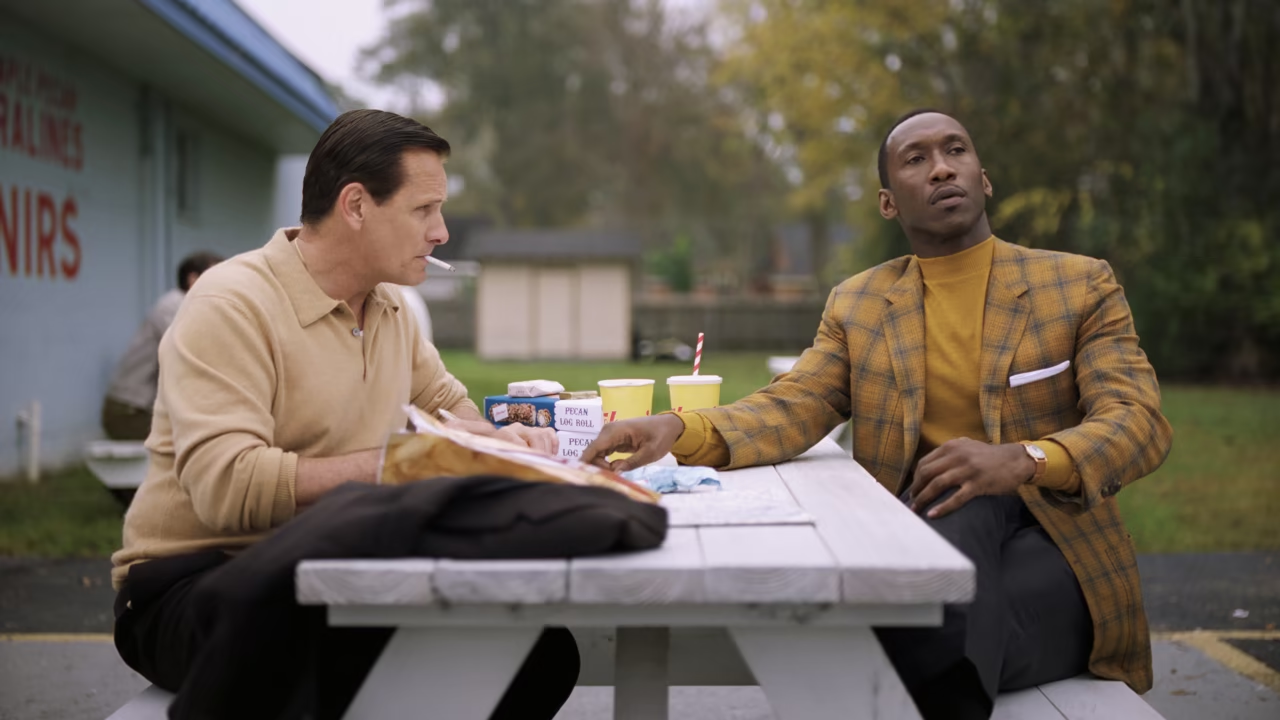
Green Book is one of those films that walked away with everything and pleased almost no one who thinks too hard about it. Directed by Peter Farrelly and starring Viggo Mortensen and Mahershala Ali, it won Best Picture, Best Supporting Actor, and Best Original Screenplay at the 91st Academy Awards—and also sparked a genuine argument about whose story it was actually telling. The screenplay was co-written by Nick Vallelonga, Tony Lip’s real son, and it is very much told from the white guy’s point of view. Whether that’s a flaw or just the shape of the story depends on who you ask.
What’s harder to argue with is how the thing actually plays. The film is based on a real 1962 road trip through the Deep South taken by Italian-American bouncer Frank “Tony Lip” Vallelonga and the Black classical pianist Dr. Don Shirley, who hired Tony as his driver and bodyguard. The title comes from The Negro Motorist Green Book, a travel guide published from 1936 to 1966 that helped Black Americans navigate a country where the wrong turn could mean real danger. It’s a film about an unlikely friendship, about racism as a lived daily reality rather than a dramatic event, and about two men who both died in 2013, just a few months apart.
An Unlikely Job Offer
Set in 1962, the story opens by introducing a nightclub bouncer named Tony Lip (Viggo Mortensen), who we first see bribing a coat check girl into handing over a hat belonging to one of the club’s wealthy patrons. Tony has a reputation for handling problems efficiently and without half-measures. The club itself is shutting down for renovations, something that had been announced well in advance, and swiping that hat is just one piece of Tony’s plan to make some extra cash now that he’s out of a job.
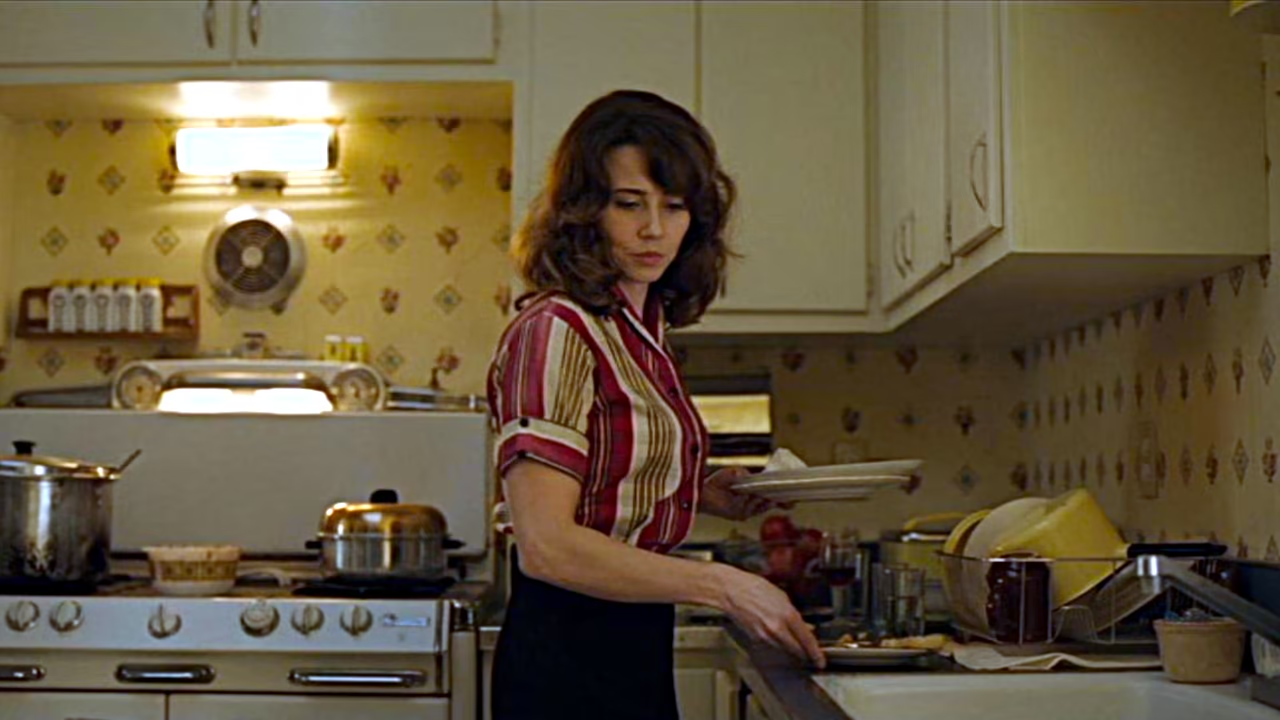
As dawn breaks, Tony heads home and crawls into bed next to his wife, Dolores Venere (Linda Cardellini), who’s still fast asleep. By midday, he’s jolted awake by the noise of relatives and extended family crowding the living room to watch a game on TV. When Tony wanders into the kitchen, he’s caught off guard to find two Black plumbers working in the house. This was 1962, and racism and discrimination were deeply entrenched, and Tony himself was no exception. He ends up throwing away the two glasses the plumbers had used, like they were contaminated.
Later, Tony stops by his regular hangout spot, where one of his buddies dares him to an eating contest to see who can put down the most hot dogs. With bills piling up and rent due, Tony doesn’t think twice before accepting. When his wife offers him something to eat, Tony sheepishly admits he’s already stuffed from the bet. She’s about to give him an earful, but her irritation melts away the moment she finds out he won, having eaten 26 hot dogs in 10 minutes.
With Tony still unemployed days later, his wife starts complaining about the rent. To keep things afloat, Tony is forced to pawn his beloved watch just to cover basic expenses. Not long after, a friend calls with a lead. A doctor is looking for a personal driver, and Tony is immediately interested and heads straight to the interview When he arrives, he’s surprised to find that the “doctor’s residence” is actually a grand, opulent performance hall. He’s not the only one who showed up for the job either, so Tony has to compete against several other candidates.
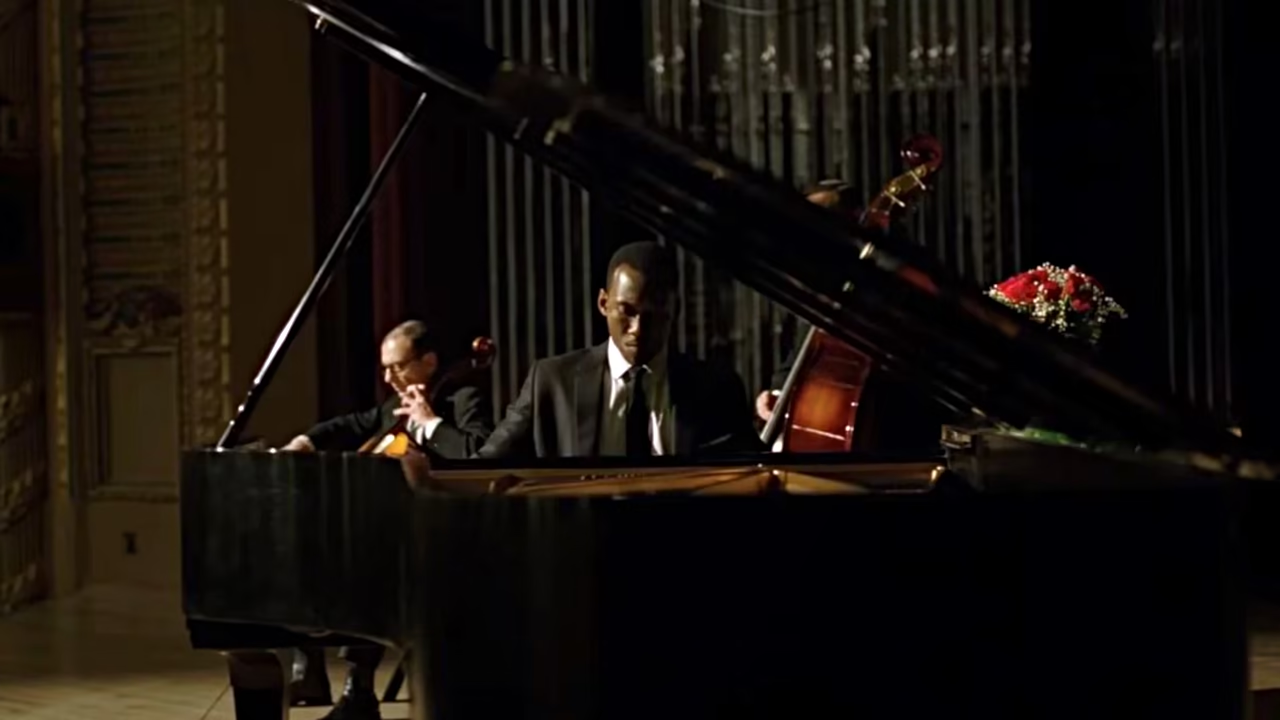
When he’s finally called in, Tony is struck by the sheer volume of rare and expensive antiques filling the space. But the real surprise is the doctor himself, who turns out to be a Black man. His name is Don Shirley (Mahershala Ali), though most people call him Dr. Shirley, a gifted pianist with a massive following among the elite. The title “doctor” attached to his name isn’t a medical one but a nod to his extraordinary intellect and his mastery of the piano, a talent widely regarded as legendary and unlike anything seen in other musicians.
Over the next two months, Dr. Shirley will be touring concert halls across the country, and he needs a personal driver who can double as a bodyguard and handle any problems that come up along the way. The pay is $100 a week. But Tony wouldn’t just be driving. He’d also be expected to iron clothes, shine shoes, escort the doctor to the bathroom, shave his underarms, and more. That last part sends Tony walking right out the door. The next morning, while Tony and his wife are still in bed, Dr. Shirley calls back and asks to speak with her directly. He bumps up the offer and asks to “borrow” her husband for two months. Tony eventually comes around and takes the job.
Two Men, One Road
On the day they leave, Tony is handed a book called The Green Book, a travel guide specifically designed to help Black people navigate which hotels and establishments were safe to visit. Tony, who started out as one of the most prejudiced guys around, swallows his pride and accepts the gig for the money. Once they’re on the road, the contrast between the two men becomes impossible to ignore. Dr. Shirley is stiff and refined, while Tony is pure street. Tony drives with one hand, eating a sandwich without a care in the world, until the doctor, worried Tony might lose control of the wheel, asks him to please stop eating and focus on driving.
At a rest stop for lunch, Dr. Shirley eats with quiet precision, minding every rule of table etiquette. Tony, on the other hand, eats like nobody’s watching. The doctor gently points out that how you carry yourself in public shapes how people see you. Tony fires back that eating is a basic human need, and if you spend your whole life worried about what others think, life just gets harder. Be yourself, as long as you’re not hurting anyone.
They get back on the road, and Dr. Shirley gets another surprise when Tony suddenly pulls over because he can’t hold it anymore and is just going to go on the side of the road. The doctor finds this baffling since he’s lived a life where proper facilities were always available, and the idea of relieving yourself in a ditch doesn’t even register as normal to him. At their first stop, the two check into a luxury hotel near the concert venue. Here we get a quiet, telling moment where Dr. Shirley sits alone drinking while the rest of his band is across the hall having a great time with women. His isolation is palpable.
The night of the concert, held at the estate of a wealthy socialite, Tony waits outside with the other drivers. It’s his first time actually watching Dr. Shirley perform, and he’s floored—the man is genuinely a genius at the piano. Right after the concert wraps, Tony is caught gambling with the other drivers. This sparks another argument between them, since Dr. Shirley, as a man of principle, sees gambling as a degrading and reckless habit.
The following day, driving toward the second city on the tour, Tony gets personal and asks the doctor something rather private. Has he ever been married? And Dr. Shirley answers patiently. He was, once, to a woman who ironically had a personality a lot like Tony’s, wild and unpredictable. But the demands of his career kept him away from home for long stretches, and eventually his wife couldn’t take it anymore. They divorced.
At a convenience stop to grab cigarettes and snacks, Tony accidentally knocks a piece of jade off a display shelf. He picks it up and is immediately spotted by one of the band members, who goes straight to Dr. Shirley and reports him. Before they leave, the doctor pulls Tony aside and asks him directly whether he stole something that isn’t his. Tony denies it, insisting he’s no thief. But when the doctor spots the jade in Tony’s possession, he sends him back inside to return it.
Explore More:
The second concert stop is a university auditorium. Tony’s job is to check the piano beforehand and confirm it matches the brand and specs written into Dr. Shirley’s contract, but it doesn’t. Not only is it the wrong brand, the piano is filthy, covered in trash, seemingly left that way on purpose by the local staff. Tony ends up in a heated confrontation with the venue worker, who goes too far and starts throwing insults, and Tony loses his temper. As the tour continues, Tony and the doctor slowly warm up to each other. Tony keeps writing letters to his wife, messily and imperfectly, just recounting his days on the road, and it’s enough to make her happy back home.
Fried Chicken and Small Victories
Heading into the third city, Tony is starving, hasn’t eaten all day, and is seriously craving fried chicken. The only option nearby is a Kentucky Fried Chicken, so he pulls over. While Tony digs in, the doctor sits quietly, half-listening to him ramble between bites. Feeling comfortable enough by now, Tony holds out a piece of chicken and offers it to the doctor. Dr. Shirley refuses at first since he’s never eaten fried chicken in his life, and the whole thing strikes him as unhealthy, greasy, and breaded. But Tony keeps pushing, and the doctor finally gives in and tries a piece. Turns out he loves it, and when he asks what to do with the bone, Tony just shrugs and tosses his out the window.
Their next stop comes with a cheaper hotel than Dr. Shirley is used to, a far cry from the luxury properties earlier on the tour, but he tells Tony it’s fine. Tony takes him at his word and checks into a separate place nearby. Not long after Tony leaves, a group of local Black men hanging around outside start bothering the doctor as he sits alone, the kind of unwanted attention that makes it impossible to just sit in peace. He decides to head to a bar to get some peace and quiet.
Shortly after, one of the band members comes looking for Tony with urgent news. Dr. Shirley is in trouble at the bar, being harassed and ganged up on by a group of white men. Tony, no stranger to situations like this, moves fast. When one of the men pulls out a knife, Tony slowly reaches behind his back as if he’s drawing a gun. Nobody knows for sure if he actually has one, but the bluff works. The men back off. Even the bar owner comes out with a shotgun to break things up.
The following morning, their car breaks down on the way to the next city due to low coolant. While Tony works on it, Dr. Shirley steps out to get some air and finds himself face to face with a group of Black field workers nearby. The look in their eyes is hard to miss, quiet judgment, like they don’t quite know what to make of him. The doctor grows visibly uncomfortable but keeps his composure until Tony tells him to get back in the car.
The next venue is a concert at a wealthy businessman’s estate, and Dr. Shirley delivers a flawless performance. But during the dinner break, the host stops the doctor from using the bathroom inside the house. Instead, Dr. Shirley is directed to a wooden outhouse out back, the kind used by the gardeners and household staff. It’s a stark reminder of how deep the racism runs. No matter how famous and respected Dr. Shirley is as a musician, the host’s prejudice doesn’t make exceptions for status or reputation. Even someone like Dr. Shirley is not exempt.
Letters, Loyalty, and Small Gestures
The next morning over breakfast, the doctor notices Tony struggling over his letter to his wife. He gets Tony’s attention and quietly helps him rework the words. The result is something genuinely beautiful—so beautiful that when Tony’s wife reads it at home, she’s moved to tears and ends up reading it aloud to her friends.
They take a stroll through downtown and pass a high-end clothing store. Inside, the attendant won’t let Dr. Shirley use the fitting room to try anything on. Having dealt with this kind of thing more times than he can count, the doctor simply turns around and walks out without making a scene. Moving on to the next city, Tony runs into two old friends from New York who happen to be working in the area. When they find out Tony is driving for a Black man, they tell him to ditch the job and come work with them instead.
That evening, as Tony is heading out, he finds the doctor already waiting for him outside. It turns out Dr. Shirley had overheard the whole conversation with Tony’s friends about switching jobs, and it shook him. Without Tony, he genuinely doesn’t know how he’d manage on his own. This is the moment that reveals what Tony is made of. He tells the doctor flatly that he’s not going anywhere. The job was a tough sell at first, but Tony has grown genuinely comfortable working for Dr. Shirley and has no intention of leaving him for anyone else.
On the road to another city, they’re pulled over by cops doing a night patrol. When Tony steps out to explain where they’re headed, the officers immediately zero in on Dr. Shirley sitting in the car. Turns out this town has a strict sundown ordinance for Black people, and things escalate fast. One of the officers crosses a line, calling Tony “half a n—–” for working with a Black man, and Tony snaps and hits him. They end up hauled into the police station. The doctor chews Tony out for letting his ego get the better of him again, while the officers sit around laughing and continuing to demean them.
Unable to just sit in a cell, Dr. Shirley requests his right to make a phone call. Not long after, a call comes in from a chief of police at headquarters who has apparently just received a call from someone above his rank. Nobody knows exactly who the doctor reached, but the two of them are released on the spot. It turns out Dr. Shirley called the Attorney General of the United States. While Tony is giddy about it, treating it like the coolest thing that ever happened, Dr. Shirley is mortified. Having to call the Attorney General of the country just to get out of a small-town jail cell feels humiliating to him, not impressive.
The argument that follows cuts deeper than their usual bickering and gets into race, identity, and what it means to belong. Eventually, in the middle of the rain, Dr. Shirley gets out of the car and lets everything out that he’s been holding in. He’s tired of being discriminated against everywhere he goes. Despite being a wealthy, celebrated musician who lives like royalty, he is profoundly lonely. White society won’t accept him, and his own community doesn’t fully claim him either. He belongs nowhere.
Walking Out, Coming Home
Back at the next inn, they end up sharing a room because the place is fully booked with couples there for a gathering. It turns out to be exactly what they need, and the two of them finally clear the air and apologize to each other for all the friction along the way. The final concert of the tour is at a hotel, and it’s the same story as before. The hotel manager sticks Dr. Shirley in a cramped storage room as a dressing room. And when Tony and the crew sit down for dinner at the hotel restaurant, the manager comes over to tell Dr. Shirley he’s not allowed to eat there. House rules, he says, no Black guests dining alongside white guests. Tension mounts as Tony tries to get the doctor seated.
Dr. Shirley threatens to cancel the performance. The manager pulls Tony aside and begs him to talk some sense into his boss, even going so far as trying to bribe Tony to make the doctor go on. Tony nearly loses it, but Dr. Shirley steps in and stops him. He leaves the decision entirely up to Tony, play or walk. And they walk. Instead of performing at a fancy venue for top dollar, Dr. Shirley and Tony end up at a Black bar down the road. Rather than the elegant concert hall, the doctor chooses to play for regular people, jumping into the energy of the room and having the time of his life.
After the show, Tony spots two men lurking nearby who look like they’re planning to rob them. He pulls out his gun and fires a warning shot, and it turns out he’d been carrying a firearm the whole trip for exactly this kind of situation. With the tour finally over, they head back. Tony is running on empty, so the doctor takes the wheel and drives him all the way home.
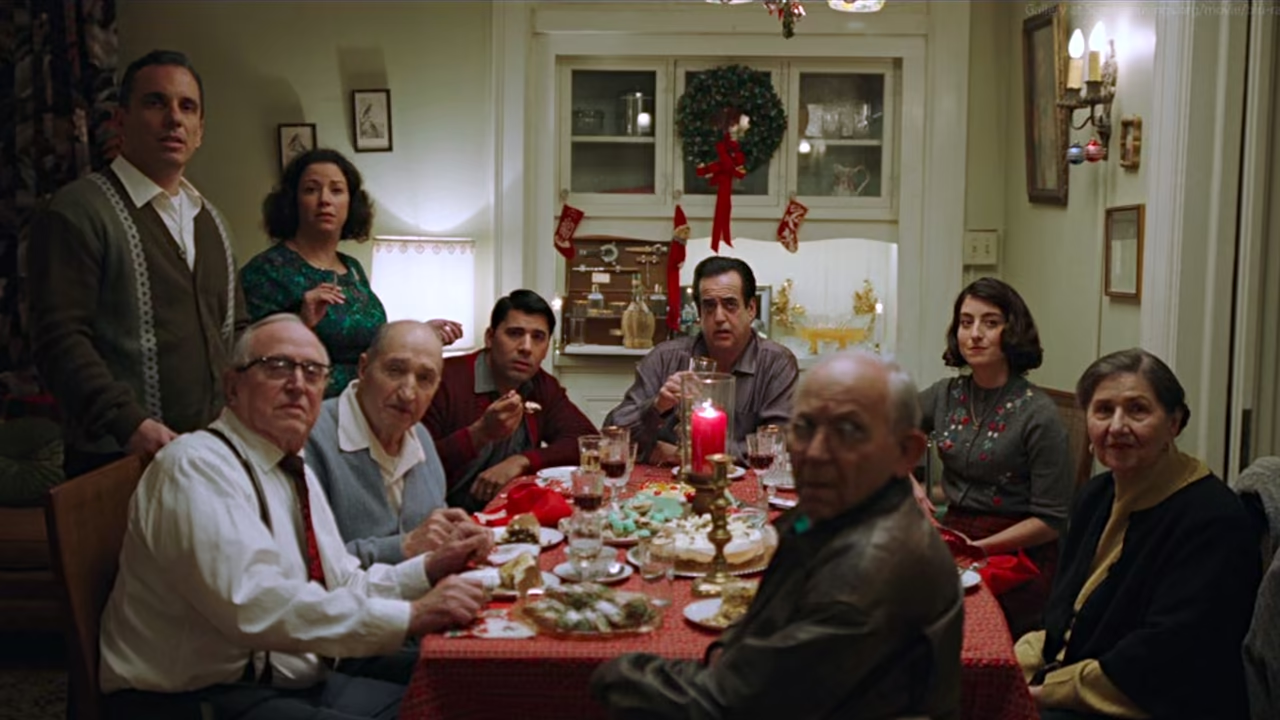
Outside Tony’s house, Tony invites Dr. Shirley in. But the doctor hesitates since he’s afraid he won’t be welcome, especially on Christmas Eve with the whole family gathered inside. He declines and drives off to spend the night alone. Back inside, Tony is greeting family and friends when there’s a knock at the door. It’s Dr. Shirley, who worked up the nerve to come after all. The look on Tony’s face says everything—this is exactly who he was hoping would walk through that door.