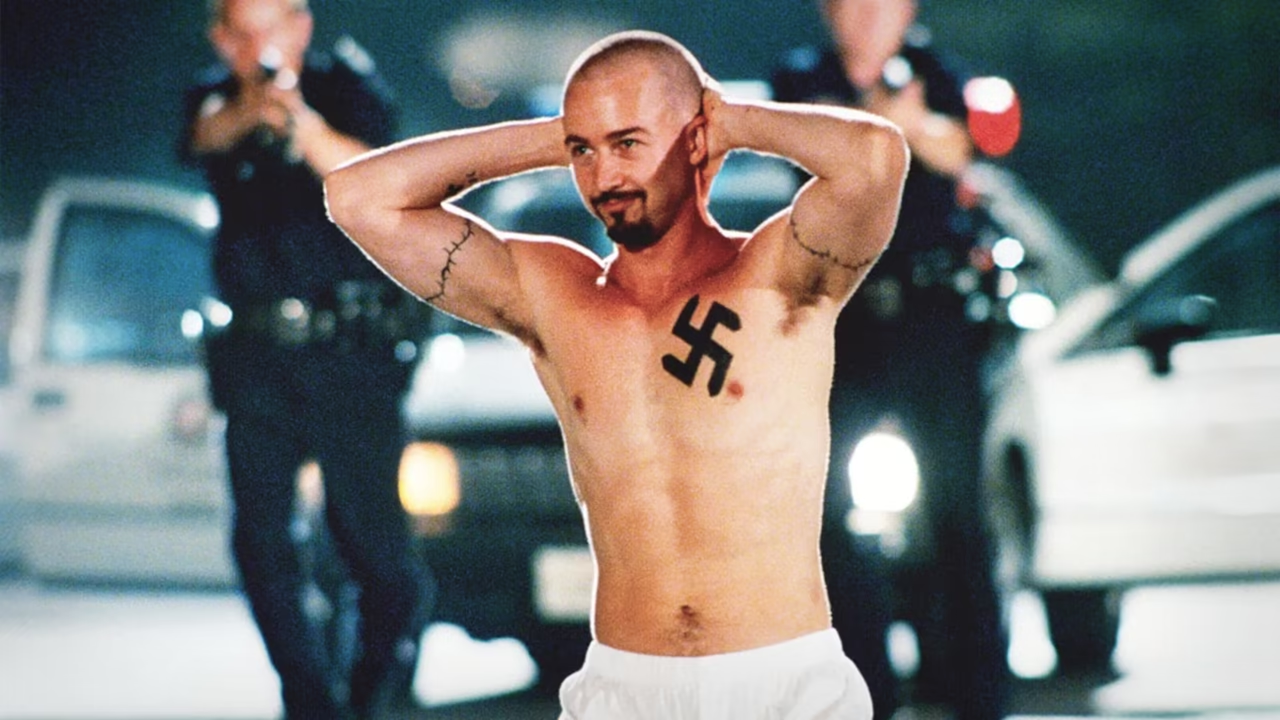
American History X came out in 1998, directed by Tony Kaye and written by David McKenna, who drew from his own experience growing up in San Diego. Edward Norton plays Derek Vinyard, a neo-Nazi in Venice Beach, and the film tells his story across two timelines: color for the present, black and white for the past. Norton was nominated for an Academy Award for Best Actor, and the film earned an 84% on Rotten Tomatoes. It was a modest box office performer, but its cultural footprint went much further than its numbers.
The film doesn’t try to make white supremacy seem complicated or misunderstood. It traces exactly how it happens: grief turned into rage, rage given a target, a target reinforced by the people around you until it becomes identity. What makes it hit harder than most films on the same topic is that Derek isn’t presented as a monster who was always this way. He was a sharp kid with a sharp mind, and that makes what happens to him, and what he does to others, genuinely difficult to sit with.
Derek’s Crime, Danny’s Beginning
Danny Vinyard (Edward Furlong) is the youngest of three siblings. Derek (Edward Norton) is the oldest, followed by Davina (Jennifer Lien). Out of the three of them, Derek is the only one who turned out truly dangerous, a hardcore white supremacist and neo-Nazi who took immense pride in being white and had nothing but contempt for anyone who wasn’t, especially Black and Asian people. Then one night in 1998, three members of the Crips show up at their house in Los Angeles trying to steal Derek’s car. Danny spots them and runs to tell his brother, who’s inside having a good time with his girlfriend Stacey. Derek doesn’t hesitate, and he grabs his gun and goes after them.
One guy gets shot and killed right there in front of the house. Another, Lawrence (Antonio David Lyons), takes a bullet to the stomach but is still alive. The third one manages to escape in the car. Danny stands there in shock, staring at the body on the ground, while Derek walks calmly over to Lawrence and kills him in one of the most horrifying ways you can imagine, driven purely by his hatred of Black people. And that’s where American History X begins.
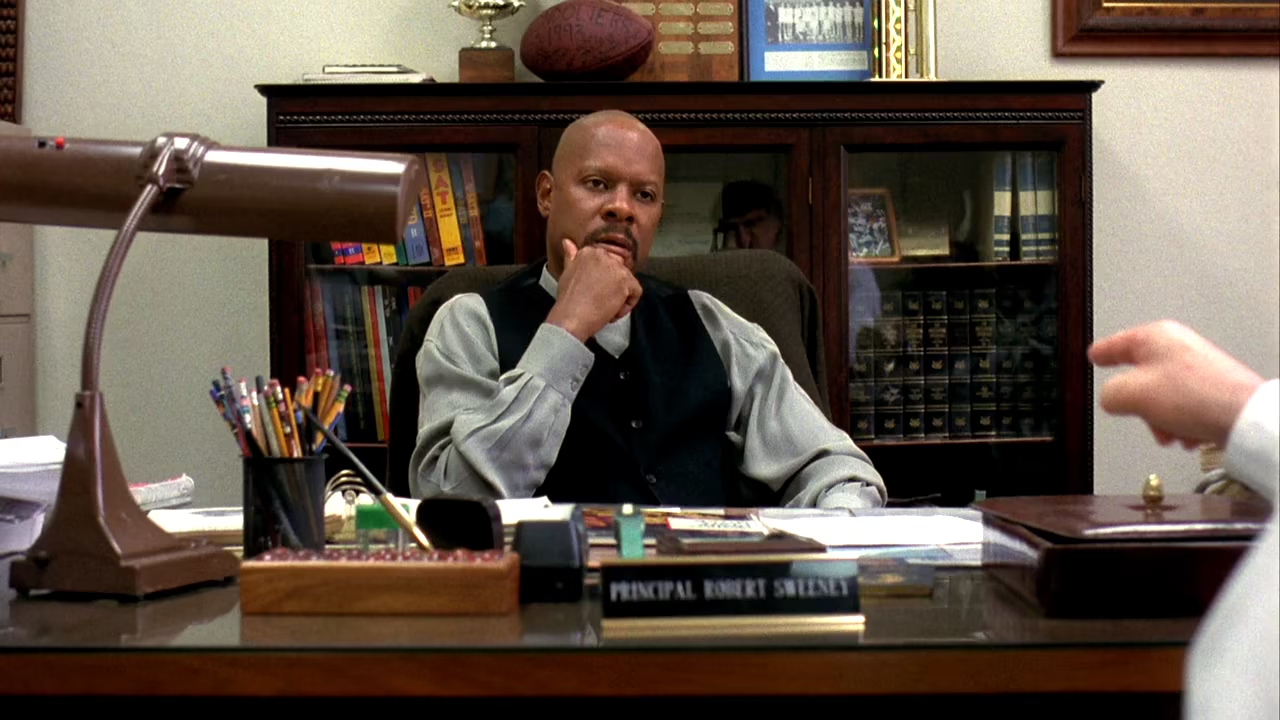
Derek goes to prison for the two murders. Three years later, his younger brother Danny, now a high school student at Venice Beach, gets called into the principal’s office. Dr. Bob Sweeney (Avery Brooks), the principal, has been tipped off by Danny’s history teacher, who reported that Danny turned in an essay analyzing Mein Kampf, Adolf Hitler’s manifesto, which is basically treated as scripture by neo-Nazis and makes Danny’s racial hatred crystal clear. The history teacher thinks Danny has crossed a line and should be expelled outright, but Bob believes the kid can still be turned around. He sees a sharp, intelligent student, the same way he once saw Derek, who also went to that school and, beneath all the rage, had been recognized for genuinely brilliant essays.
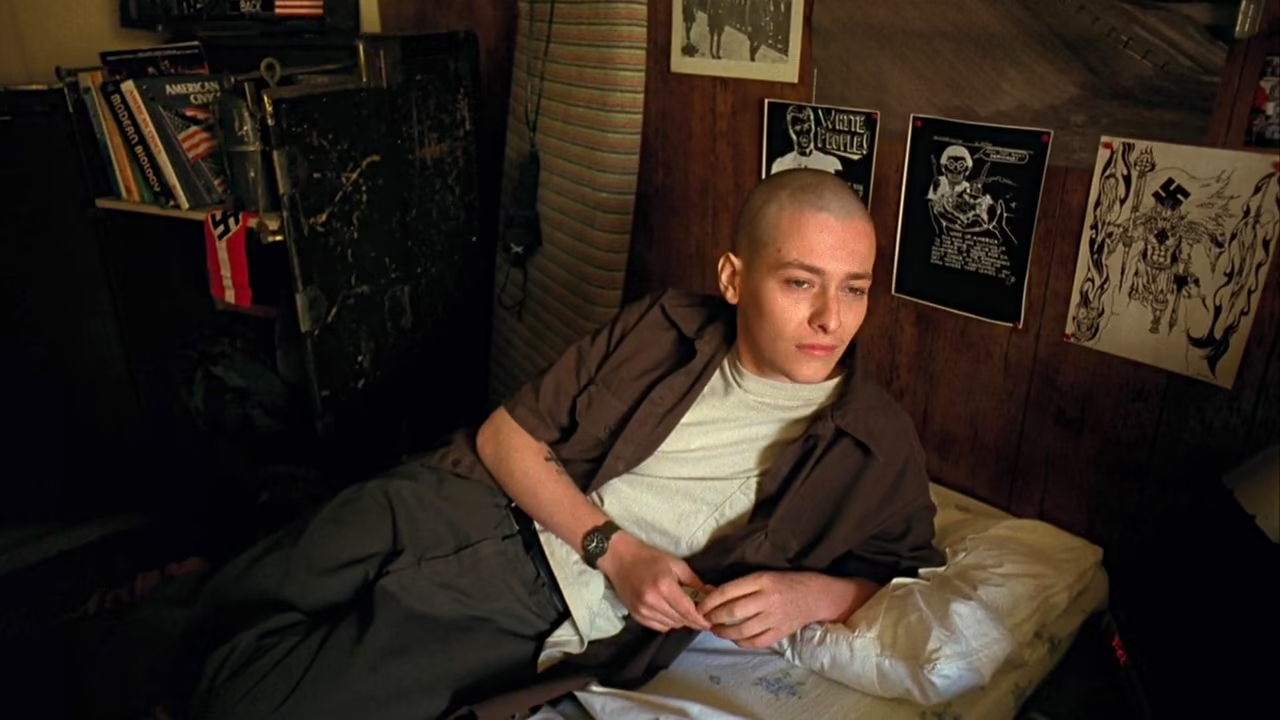
So Bob sets up a one-on-one history tutorial just for Danny called American History X, with the understanding that if Danny fails, he’s out for good. Bob also gives Danny his first assignment due the very next morning, an essay analyzing everything that happened to Derek, before prison and during, and what it all meant for Danny and the rest of their family. The timing is significant, because that same morning, Derek is being released on parole. Bob’s conviction is that Danny’s neo-Nazi beliefs didn’t come from nowhere, and Derek is the blueprint.
The scene shifts to Danny in the school bathroom when a group of Black students led by a kid named Henry (Jason Bose Smith) suddenly shows up, jumping a white kid they’ve accused of snitching to the administration. Danny walks out of the stall without a trace of fear and stares Henry down. The confrontation fizzles out only because the bell rings and everyone has to get to class. Meanwhile, Principal Bob gets called down to the LAPD to give his take on Derek’s release. The concern is that Derek came up under Cameron Alexander (Stacy Keach), a respected and feared neo-Nazi figurehead in the Venice Beach area who has been pumping out white supremacist propaganda through books, videos, racist bands, and hate literature for years.
Together, Derek and Cameron built a gang called the Disciples of Christ, or DOC, recruiting street kids from around Venice Beach. And Derek’s hatred of Black people wasn’t just ideology he picked up from Cameron, but goes back to the murder of his and Danny’s father, a firefighter who was shot and killed by Crips while on duty. Now Derek is free and back in Venice Beach, which the Crips have largely taken over. The police are keeping their distance but staying on alert, knowing that with Derek back, things could easily explode into gang warfare.
Derek Returns, Already Different
The family has missed Derek badly, because he refused all visits during his three years inside, not wanting them to see him that way and not wanting the pain of it to break him while he was still locked up. Back home, Derek has come back from prison a genuinely changed person, and his neo-Nazism and white supremacist beliefs appear to be completely gone. He notices the DOC tattoo on Danny’s hand and tells him to take Bob’s assignment seriously. He tells him to stop smoking. He forbids him from hanging around Cameron and the rest of DOC. He even says he’s going to get a job and take care of the family.
That night, while working on his essay, Danny’s mind drifts back to a memory of Cameron sending Derek to stir up a group of white street kids in Venice Beach who’d been getting pushed around by both the Crips and a Mexican gang. Derek goes off in front of them, raging about how America is being destroyed by immigration, from the money wasted locking up undocumented immigrants to the jobs being taken from white people. Derek whips the crowd into a frenzy and leads them on a raid of a local grocery store, one that used to be white-owned, went under, and was bought by a Korean family who employed around forty workers. They don’t go there to rob it. They go to destroy it, smashing merchandise and beating the employees on the floor.
That wasn’t the only time Derek’s violence spilled over. Derek got into a blowout argument with Doris’s boyfriend Murray (Elliott Gould), a history teacher and strong believer in racial equality. Derek nearly lost control and came close to hurting his own sister Davina when she disagreed with him. He threw Murray out of the house, and eventually Murray ended his relationship with Doris because of Derek’s behavior. Doris, in turn, kicked Derek out. That’s what brings us back to the night at the beginning of the film. The three Crips come to the house. One gets shot dead, one escapes in the car, and Lawrence is down on the ground, still alive.
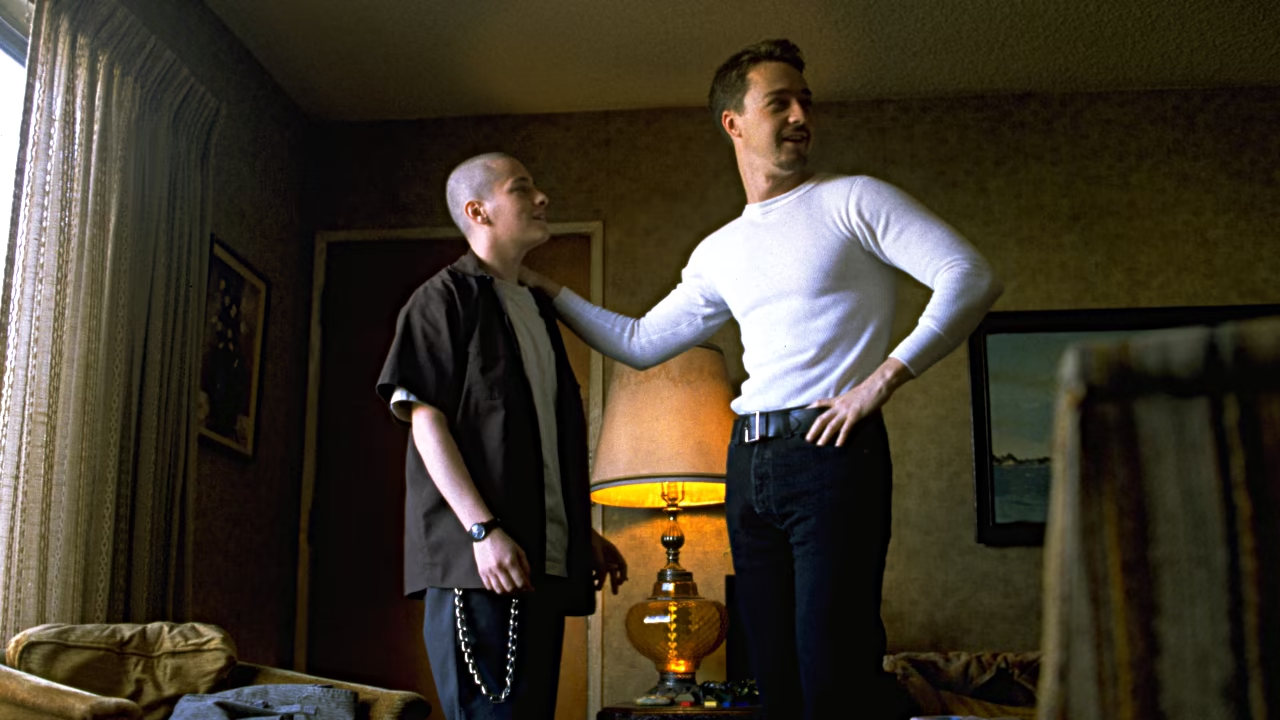
Derek is absolutely furious because these guys tried to steal his dead father’s car, and his father was killed by the Crips in the first place. He drags Lawrence to the curb, forces his mouth onto the edge, and stomps the back of his head. Danny, who was still in middle school at the time, screams at him to stop, but Derek is past the point of no return. The cops arrive moments later, and Derek gets arrested, smiling and showing not a single sign of regret.
Explore More:

The DOC Party Fallout
Danny writes all of this into his essay, including the psychological toll it took on him. The sound of Lawrence’s skull shattering haunted his dreams for months. But over time, that horror faded, because Danny convinced himself that what Derek did was justified. That night, two of Danny’s friends drag him to a DOC party, a gathering of neo-Nazis drinking, listening to white power music, and celebrating their ideology. The crowd treats Derek like a legend, cheering him for killing two Black men. Derek also runs into Stacey, his girlfriend, who hasn’t seen him in three years, but she flat-out refuses when Derek tells her he wants them both to walk away from the organization for good. Prison changed Derek completely, but it didn’t change her.
Derek pulls Danny out of a conversation with Cameron and sends him out of the room. Once Danny’s gone, Cameron starts talking about how the organization is expanding, how the internet has made it easier than ever to spread the movement across cities. Derek’s name carries serious weight in these circles, and he’s practically a symbol. But Derek looks Cameron dead in the eye and tells him he’s done. Cameron doesn’t buy it. He figures Derek is just burned out from three rough years inside. That word, “rough,” sets Derek off immediately.
He throws it right back at Cameron, telling him he’s heard the rumor that Cameron once got arrested but walked free after handing two DOC teenagers over to the cops. Cameron tries to cool things down, but Derek is done being managed. He tells Cameron he’s leaving and taking Danny with him, and if Cameron ever comes near Danny or their family again, Derek will kill him. Cameron warns him that the rest of DOC will come after him the second they find out he’s turned his back on them. Cameron even tries to get under Derek’s skin by saying Danny will choose the gang over his own brother, and that’s what finally pushes Derek over the edge.
Derek beats Cameron to the floor right there in his own office. When he walks out, the whole room has already turned on him because Stacey has been running her mouth, telling everyone that Derek has abandoned the movement. It erupts into chaos when someone finds Cameron bleeding in the back. Derek manages to wrestle a gun away from Seth, and the two of them get out of there before anyone can stop them. On the drive home, Danny pushes Derek to explain everything. What happened in prison? What made him flip? Once Danny calms down enough to listen, Derek starts talking.
Prison Changed Everything
Word traveled fast that Derek was in for killing two Crips, which made him a target for a lot of the Black and Latino inmates. Derek gravitated toward the white prison gang and found work in the laundry unit alongside a Black inmate named Lamont (Guy Torry). He gritted his teeth every shift. The first year passed without major incident. Then Doris came to visit and told him about Danny, who was going down the same road Derek had, buying into Cameron’s ideology and joining DOC, and Derek exploded. In his mind, his mother was indirectly blaming the very beliefs he’d built his identity around.
But gradually, something shifted between Derek and Lamont. They started actually talking. Lamont turned out to be one of the funniest people Derek had ever met, and his story was almost absurd. He stole a TV from a store, accidentally dropped it on a cop’s foot, got charged with assaulting an officer, and ended up with a six-year sentence. Then one day, Derek’s white prison crew noticed how close he’d gotten with Lamont and the other Black inmates, playing basketball with them and laughing with them, and their response was brutal. They caught Derek in the shower and gang-raped him as punishment for betraying the group.
The next morning, Bob visited Derek in the prison infirmary. Derek broke down crying, not just from the pain but from the humiliation. Bob told him Danny had officially joined DOC, and then said something that cut deep. Derek’s rage had blinded him to everything else, and it had led him to kill two men who weren’t responsible for his father’s death. Bob admitted he’d spent years blaming others for everything wrong in his own life and never once felt any better for it.
The question he eventually had to ask himself was whether any of it had made his life better. He posed the same question to Derek. All the neo-Nazism, building DOC with Cameron, the murders, all of it was rooted in grief over losing his father. Did any of it make his life better? Derek had no answer. He asked Bob to help him get out and stop being a burden on his family. Bob agreed, but on one condition: when Derek got out, he had to go home and be there for his family.
After that, Derek cut himself off from the white prison gang entirely, kept his head down, and read the books Bob brought him. His record cleaned up, and with Bob’s help, his sentence was cut significantly. Before he walked out, he stopped to say goodbye to Lamont, the man who had cracked something open in him. He came to see that he had never really believed any of it for its own sake, because he’d been chasing revenge for his father’s death, and the whole thing had only destroyed more of what he had left. After hearing all of that, Derek and Danny drive home in silence and tear down every piece of neo-Nazi paraphernalia on Danny’s walls.
The Seed at the Dinner Table
Danny goes back to his essay. Then his mind drifts to a memory of his father, back when Derek was still a good student. Over lunch one afternoon, Derek had been talking about a teacher he really admired, Bob. His father listened and dismissed it. Bob’s words didn’t count for much, he said, because the deck was being stacked against white people everywhere, with jobs, recognition, and opportunity all going to Black people regardless of actual ability. That was the seed. Derek’s racism didn’t come from nowhere, and it came from the dinner table and from his father. That’s what makes it so tragic.
The next morning, Bob shows up with a couple of officers and asks Derek to go see Cameron and Seth, who were both hurt during the DOC party the night before, but Derek refuses flat-out. But Bob pushes back, saying that like it or not, Derek came out of that world, and if he just vanishes without resolution, it could come back on him and his family. Reluctantly, Derek agrees, but first he’s taking Danny to school. At the school entrance, Derek tells Danny to be careful if he ends up walking home alone. He spotted a car watching their house the night before. Danny heads inside, and the camera lingers on Derek standing outside, visibly unsettled, like something in him knows today is going to go wrong.
Inside, before heading to class, Danny stops by the bathroom, essay in hand. And that’s where Little Henry finds him. The same kid from the bathroom at the start of the film. What Danny didn’t know then, and what we only understand now, is that Henry is Lawrence’s little brother, initiated into the Crips with one purpose: collect a debt. A life for a life, and Lawrence is dead. Now Danny is too.
The film closes on Danny’s final words in the essay. His conclusion is simple: hate is baggage, life is too short to be pissed off all the time, and it’s just not worth it. He closes with a quote from Abraham Lincoln: we are not enemies, but friends. We must not be enemies. Though passion may have strained, it must not break our bonds of affection. The mystic chords of memory will swell when again touched, as surely they will be, by the better angels of our nature.