Damien Chazelle shot the short version of Whiplash on a shoestring just to prove the concept worked. Nobody wanted to fund a movie about a jazz drummer, so he took one scene from his script, submitted it to Sundance 2013, and let it do the talking. It won the jury prize, unlocked financing, and the feature followed a year later. By 2015, the film had three Oscars, a 94% score on Rotten Tomatoes, and J.K. Simmons had swept every major supporting actor award going. For a film studios passed on, Whiplash ended up being one of the most argued-about movies of the decade, not because it was comfortable, but because it kept asking a question nobody could answer cleanly.
That question sits at the center of everything: where does drive end and destruction begin? Whiplash doesn’t pick a side. It gives you Andrew Neiman, a 19-year-old jazz drummer at a fictional version of a conservatory that looks and feels a lot like Juilliard, and it gives you Fletcher, his conductor, who believes that the only way to create greatness is to push someone past what they think they can survive. The film follows Andrew from his first audition to the stage he takes back, and what it captures isn’t just the cost of ambitio —it’s the strange, uncomfortable truth that sometimes the person trying to break you and the person trying to make you are the same man.
The Drummer Fletcher Noticed
Andrew Neiman (Miles Teller), a 19-year-old jazz drummer with ambitions bigger than his talent had yet caught up to, was deep in a practice session when a bald man walked through the door. It was Terence Fletcher (J. K. Simmons), the conductor of the school’s top ensemble, the best in the building. Whenever other groups rehearsed, Fletcher had a habit of drifting by the doorway and quietly watching. Everyone knew what he was doing: hunting for talent to bring into his orchestra.
After rehearsals, Andrew would always slip over to the hallway outside Fletcher’s music room and peer through the window, imagining the day he’d be on the other side of that door. Because getting into Fletcher’s ensemble wasn’t just a goal, it was a fast track to everything. So when Fletcher walked into his practice room that day, Andrew went rigid. Fletcher asked him to play a double-time swing, just to see where his fundamentals were. But Andrew hadn’t even finished the groove before Fletcher slammed the door and walked out. Just like that, it was over.
When his father, Jim Neiman (Paul Reiser), found out, he said one failure wasn’t anything to lose sleep over. Life was long, and by the time Andrew was his age, he wouldn’t even remember caring about something this small. But Andrew wasn’t built that way. To him, failing meant he simply hadn’t worked hard enough. He went home and ran the practice recording over and over, drilling the double-time swing until the groove lived in his hands. He kept dreaming about the day he’d be in the same conversation as Buddy Rich.
When the ensemble held another rehearsal, Fletcher showed up unannounced. He tore through the whole room with sharp, targeted words. The musicians were like horses lined up at a race, and every time Fletcher cut them off with a wave of his hand, another dream collapsed, snuffed out mid-note. When he got to Andrew, he asked for the double-time swing again. Days of grinding without sleep had paid off. So Fletcher told him to be there at six in the morning. What he didn’t know was that this was the beginning of a nightmare.
Fletcher’s First Lesson in Fear
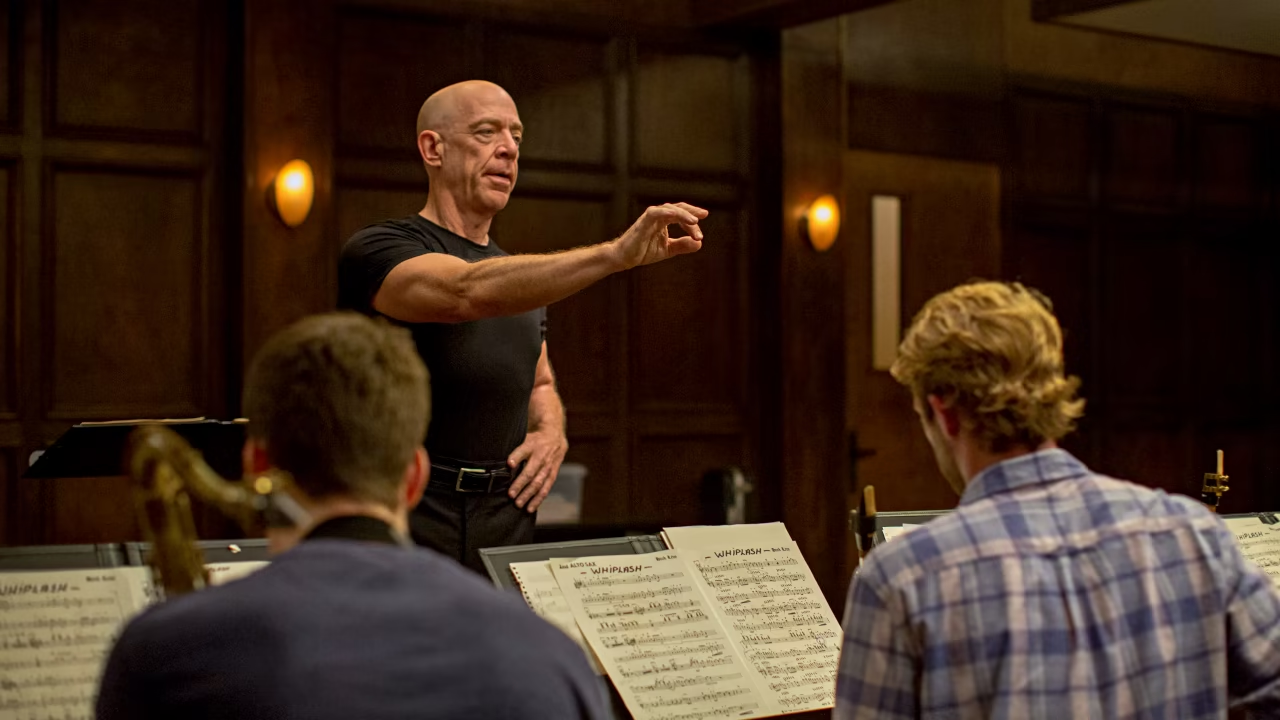
Fletcher had told him to come hours early, maybe just to see how he’d handle it. At exactly nine o’clock, Fletcher walked in with the precision of a second hand. The room went dead quiet. He shrugged off his jacket and surveyed the space like a king who was perpetually pissed off. Nobody dared breathe. Fletcher raised his hand, and rehearsal began. As vile as his personality was, his ears were something else entirely, like he had multiple channels running at once. He could hear the fourth trumpet player miss a note from across the room.
Then he stopped the rehearsal cold. With a tight expression, he said someone was playing out of tune, and asked what the point of playing jazz was if you couldn’t even tell when you were flat. He ended up pointing at a heavyset trombone player as the culprit. Fletcher erupted, and the guy broke down in tears right there. After throwing him out, Fletcher told the room that the heavyset player hadn’t actually played a wrong note. Someone else in the orchestra had. But the reason he kicked him out was simple. If you don’t even know when you’re right, that’s far more embarrassing than being wrong.
During the break, Fletcher called Andrew over for a chat. He asked about his family background, since nobody in it came from the music world. Fletcher suggested that Andrew probably didn’t have much natural talent to lean on, which meant he’d have to make up for it through sheer hard work. He brought up Charlie Parker, Bird the saxophone legend, and how a teacher once hurled a cymbal at his head to wake him up. The message Fletcher was sending couldn’t have been clearer. Real greatness only comes out under extreme pressure.
Back in the rehearsal room, Fletcher actually praised Andrew, said he reminded him of a young Buddy Rich. But when they hit bar seventeen, Andrew started stumbling. Second attempt, wrong. Third, wrong. Fourth, still wrong. Fletcher stayed remarkably patient. On the fifth try, Fletcher was nodding and then turned away. Andrew thought maybe he’d finally nailed it. Then a chair flew at his head.
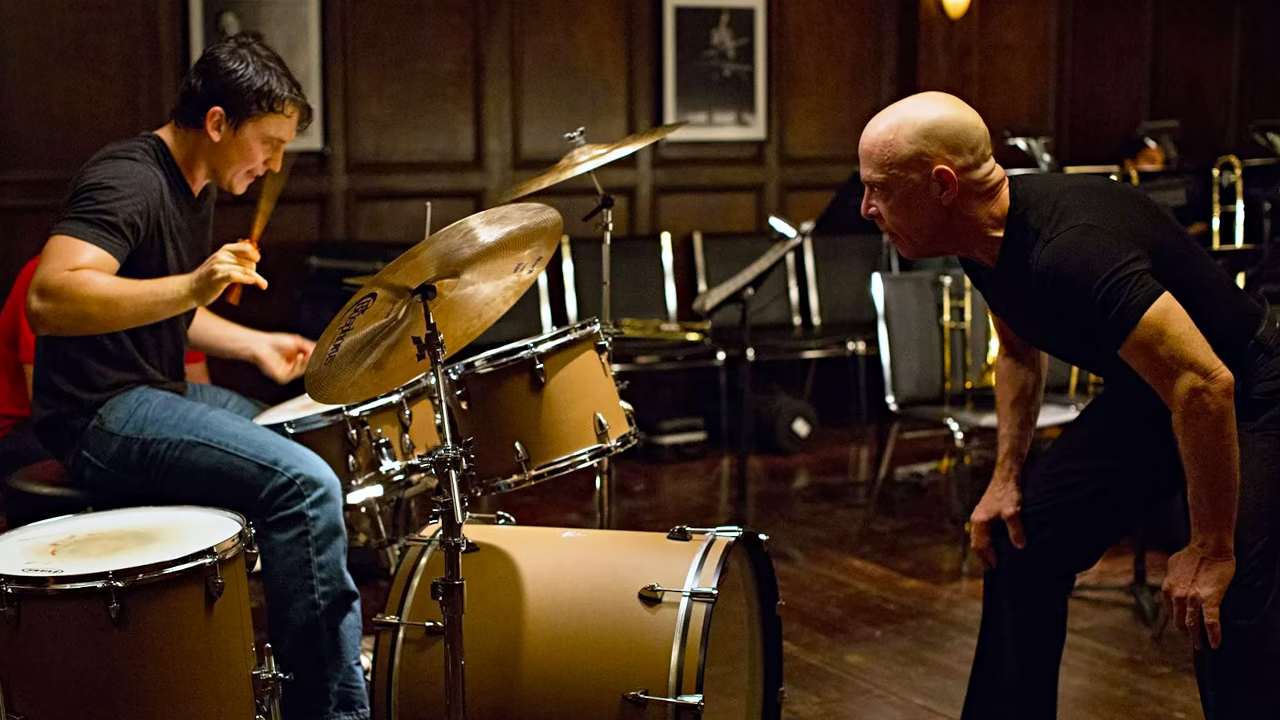
Andrew froze as Fletcher’s face shifted completely. He started screaming, demanding to know whether Andrew was rushing or dragging. Andrew was still dazed and had no idea what Fletcher even meant, so Fletcher grabbed him and made him count out the rhythm while slapping him in the face to the beat. It turned out Fletcher had been digging into Andrew’s family background earlier not out of curiosity, but so he’d know exactly where to aim when he decided to humiliate him.
Andrew went home wrecked. Then he saw a Buddy Rich record sitting there, and something in him clicked back on. He threw himself into practicing with an intensity that bordered on self-destruction. He played every night until at least two in the morning. He moved his mattress into the practice room and slept there. He beat the drums until his palms blistered and bled, and he didn’t stop. He just taped them up and kept going. All in service of one thing: he was never going to be the backup guy again.
The Seat He Stole
Not long after, a real opportunity showed up. The ensemble was booked for a major performance. Andrew was still the alternate going into rehearsals. After the session, the lead drummer handed his sheet music to Andrew to hold. Andrew set it on a chair while he went to get a drink, and when he came back, it was gone. The lead drummer panicked, but it was too late. Fletcher told him to get on stage anyway. The guy said he couldn’t play without the music. Andrew jumped in. He had run this piece thousands of times. Every single note lived in his hands. His performance was locked in, and the ensemble took first place. Andrew was officially the lead drummer.
Riding that high, he even asked Nicole (Melissa Benoist) out, someone he’d had his eye on for a while. His approach was awkward enough to make anyone wince, but she said yes anyway. For a stretch, things actually felt close to normal. But outside the practice room, Andrew’s world was smaller than it looked. His family didn’t get it. When they heard he’d become the lead drummer, they received it with polite, hollow smiles, then spent more time praising a cousin who’d landed a sports scholarship. Andrew had no friends, no respect from his family, and hadn’t received a single genuine compliment from anyone.
Explore More:
At the dinner table, he pointed out that Charlie Parker didn’t have friends either, wasn’t taken seriously either, and still became the greatest musician who ever lived. His family pushed back, asking whether that was really what he wanted—to end up a drug addict and a drunk who died at 34. Andrew answered calmly that he’d rather die young and be remembered than live to 90, healthy and rich, with no one left who knew his name.
But after practice that day, Fletcher hit him with another gut-punch. He said he’d found someone new, a more talented player. He made the two of them go head-to-head, then handed the lead spot straight to the newcomer. Andrew was furious and refused to accept it. He tracked Fletcher down to protest and got a blunt answer, that if he wanted the seat back, he’d have to earn it. To free up more time to practice, Andrew ended things with Nicole. He came home and bought a big bag of ice. When his hands bled, he’d plunge them in until he couldn’t feel anything, then go straight back to the kit. He practiced until he was possessed, cursing out loud, punching the drums until his skin split open.

Then Fletcher raised the stakes again. He brought all three drummers into the room and put them against each other. He wanted tempo 400, nearly thirty subdivisions per second. All three played themselves into the ground. Fletcher drove them from eleven at night until two in the morning. Andrew’s hands blistered and bled again, and he slipped into a state that genuinely looked like a breakdown. By the end of it, Andrew had clawed his way back to the lead spot. But there was no joy in his face. He was starting to wonder whether chasing perfection at the cost of everything was actually worth it.
The Competition That Broke Him
The next afternoon, they had a major competition. On the bus heading over, a tire blew out. Andrew bolted off in a panic, ran into a car rental office, and drove off at a reckless speed. When he arrived, Fletcher told him flatly that the lead seat had been given to someone else, and that he wasn’t just late, he didn’t even have his sticks. Andrew had left them at the rental counter. There were eleven minutes until showtime. Fletcher warned him that one minute late or one beat off during the performance meant he was back to alternate, or gone entirely.
Andrew ran back, grabbed his sticks, and drove back while on the phone. He was so fixated on the time that he never saw the truck coming at him from the side. The car was totaled. Andrew crawled out with blood running down his face. He could barely stand. But his mind had room for exactly one thing, and that was the show. He made it with one minute to spare. He took his seat at the kit. But the moment the music started, it was clear he was in bad shape. His hands were shaking uncontrollably, and he dropped a stick. Fletcher finally stopped everything, walked over with a cold look on his face, and told him he was done.
Every last thing Andrew had been holding back erupted. Like a cornered animal, he lunged at Fletcher and the two of them went at it in front of everyone. The fallout was swift, and Andrew was expelled. But the incident had drawn the attention of lawyers and police. It turned out one of Fletcher’s former students had spiraled into severe depression from Fletcher’s methods and eventually took his own life. An attorney came to Andrew looking for testimony to build a case against Fletcher.
Andrew hesitated because his feelings about Fletcher were complicated. The man was a monster, but under his brutality, Andrew had grown faster than he ever thought possible. After weighing it all, Andrew agreed to testify. The lawyer promised full anonymity, so Fletcher would never know it was Andrew. Watching old home videos of himself playing as a kid, Andrew felt something he hadn’t expected. He didn’t actually mind the idea of being a casual drummer forever. He pulled the Buddy Rich poster off his wall and threw it away. He got a job waiting tables, tried to live like a normal person, and a whole summer went by.
Two Obsessives, One Truth
Even after quitting, he still instinctively kept tabs on the jazz world. One night on his way home from work, he passed a jazz bar and saw Fletcher inside, sitting in as a guest pianist. Without really deciding to, Andrew walked in. Fletcher was at the piano, warm, feeling every note, completely at ease, none of the monster showing. When the song ended, Andrew started to leave. Fletcher spotted him and called him over, playing it as if he had no idea Andrew was the one who’d reported him.
He was almost sincere about it. Fletcher said he hadn’t gone into teaching to be cruel—that any idiot could wave their arms and keep tempo, but that he pushed his students past what they believed they were capable of. Charlie Parker became the greatest musician in the world because Jo Jones once threw a cymbal at his head. That night, Bird walked off stage humiliated, fighting back tears. But the next day he came back and practiced harder than ever. Somewhere in that conversation, it hit both of them, Andrew and Fletcher, that they were the same kind of person, two obsessives. Andrew was willing to destroy himself to become the next Charlie Parker. Fletcher was willing to destroy himself to be the one who created the next Charlie Parker.
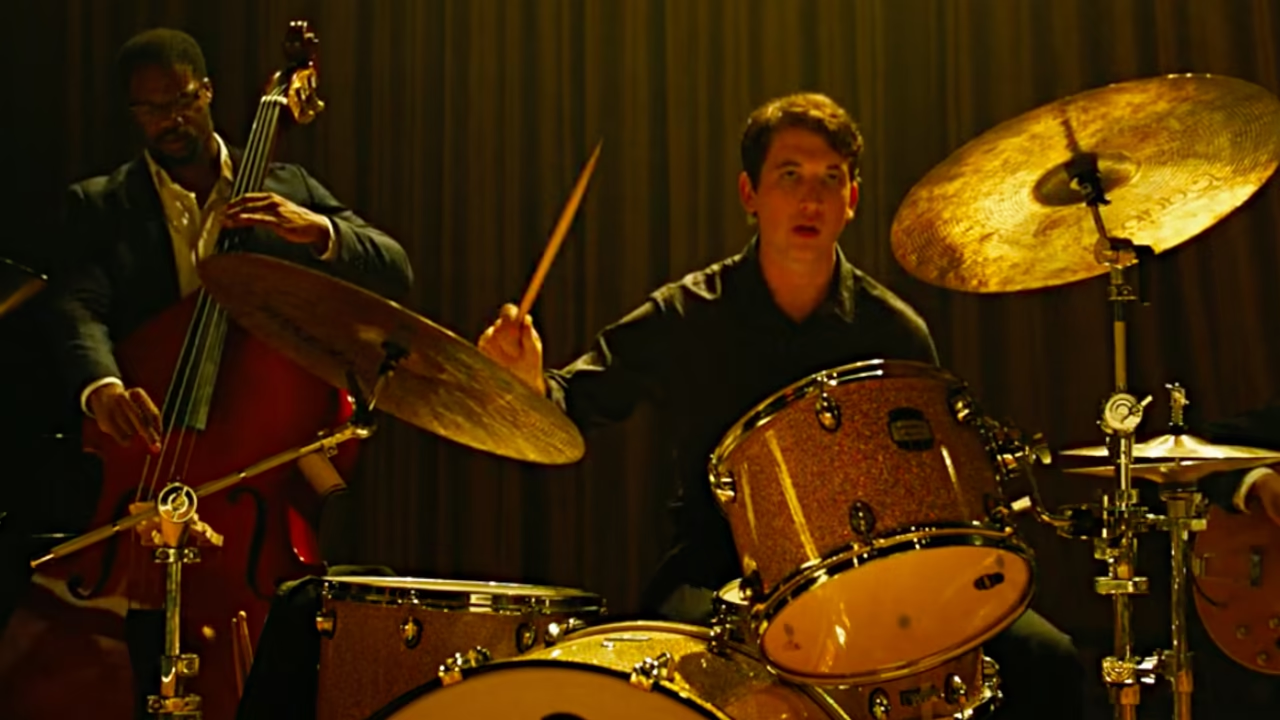
Then Andrew asked the question that had been sitting there all along, whether Fletcher was ever afraid that his method would break the next Charlie Parker before he ever got the chance. Fletcher answered plainly that a real Charlie Parker would never break, and that backing off would only mean wasting him. The two most dangerous words in music, he said, were “good enough,” because if Jo Jones had settled for that with Charlie Parker, the world might never have known who he was. As they were parting ways, Fletcher mentioned a jazz festival in two days, and said he hoped Andrew would play. After he hung up, the resignation in him slowly shifted into something harder. That old, stubborn ambition he thought was gone was back.
The Stage He Took Back
On the day of the performance, Andrew stood at the intersection outside the venue and stared up at the building. His father had come, which helped settle something inside him. Before they went on, Fletcher addressed the ensemble, telling them that the people in those seats ran the industry, and that impressing them meant a future while failing them meant it was over. Andrew sat down at the kit feeling certain, like success was finally right there, within reach.
Then Fletcher came up to him, quiet and dark, and told him he knew it was Andrew who had reported him and cost him his position at the school. When the program was announced, Andrew’s stomach dropped. The piece they were about to play wasn’t just something he’d never rehearsed. There was no sheet music on his stand, and this was a setup. Fletcher was willing to torch his own career just to bury Andrew’s.
When the music started, Andrew was just trying to survive it, scrambling to keep up, one step behind the whole time. When it was over, the applause was thin and polite. Fletcher twisted the knife, telling him it looked like he simply didn’t have it, then turned to the audience with a fake apology, explaining that Andrew was only supposed to be the backup drummer. Destroyed, Andrew walked backstage. His father pulled him into a hug, and then something changed in Andrew’s eyes. He thought about what he’d said at that dinner table, that he’d rather die at 34 and be remembered than live to 90 and disappear. He broke away, walked back out onto the stage, and started playing by himself.
The musicians looked around at each other, lost. But Andrew told them to follow him. Fletcher stormed toward him and got a sharp crack of the cymbal in return. So Fletcher had no choice but to fall in. The whole stage started rotating around Andrew. It became something like a duel between two masters, each one pushing the other, neither willing to let go. When the piece should have ended, Andrew didn’t stop. He played faster and more ferociously, past the limits of his body, hitting tempo 400 with a precision that felt like crossing into another dimension.
Then, under Fletcher’s guidance, he pulled the tempo back and built it back up again, perfectly, without a single mistake. Fletcher stripped off his jacket and started conducting with everything he had. There’s a thin line between genius and madness, and the most extreme dedication always tips into obsession. A heart that’s chasing something can take you all the way to heaven, or drag you straight to hell. But in the end, the smile that passed between Andrew and Fletcher said everything. It was a real reconciliation. Andrew had become the next Charlie Parker. And Fletcher had finally done what he’d set out to do—he’d made one.